 By Saurav
A plate of idli in Chennai, a bowl of kimchi in Seoul, yoghurt in the Middle East and a serving of sauerkraut in Central Europe may appear completely unrelated. Yet all of them tell a similar story: for centuries, communities around the world have used microorganisms to transform ordinary ingredients into foods with new flavours, textures and storage characteristics.
Long before refrigeration and modern food factories, fermentation was one of humanity’s most valuable food-processing traditions. People learned through experience that milk could become yoghurt, vegetables could develop distinctive sour flavours, grains could produce fermented batters and soybeans could be transformed into entirely new foods.
What makes fermentation especially interesting is how differently cultures have used the same basic biological process. Local climate, crops, microorganisms, religious traditions, migration and family practices have created thousands of fermented foods.
For Indian readers familiar with dahi, idli, dosa and numerous regional fermented foods, exploring global fermentation reveals just how universal—and culturally diverse—this ancient practice really is.
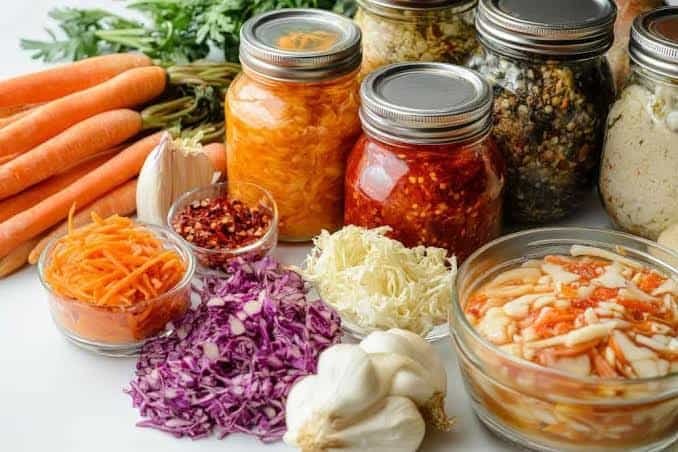
Fermented Foods Around the World at a Glance
| Region | Well-Known Fermented Foods | Common Base Ingredients |
|---|---|---|
| India | Dahi, idli, dosa, dhokla and regional foods | Milk, rice, lentils, grains |
| Korea | Kimchi | Vegetables |
| Japan | Miso, natto, soy sauce | Soybeans, grains |
| China | Fermented soy products and vegetables | Soybeans, grains, vegetables |
| Southeast Asia | Tempeh, fish sauces | Soybeans, fish |
| Europe | Yoghurt, cheese, sauerkraut, sourdough | Milk, cabbage, grains |
| Middle East | Yoghurt and fermented dairy products | Milk |
| Africa | Fermented grain porridges and breads | Maize, millet, sorghum, teff and other grains |
| Americas | Cacao, fermented beverages and vegetable products | Cacao, maize, fruits, vegetables |
India: Fermentation Changes From Region to Region
India itself demonstrates why it is difficult to talk about one single fermentation tradition.
In southern India, fermented rice-and-lentil batters are central to foods such as idli and dosa. Fermentation changes the batter’s aroma, acidity and physical properties, helping create the characteristic texture of the final food.
Dahi is another familiar example. Microorganisms convert lactose in milk into lactic acid, producing the sour taste and thicker texture associated with fermented milk.
Other Indian fermented foods include different regional versions of:
- Dhokla
- Fermented rice preparations
- Fermented bamboo-shoot products
- Fermented soybean foods
- Traditional beverages
- Regional grain-based foods
The Northeast is particularly rich in distinctive fermentation traditions involving soybeans, bamboo shoots, fish and local ingredients.
India’s enormous variation in climate, agriculture and community practices means fermentation can look completely different from one state to another.
Korea: Kimchi as Food and Cultural Identity
Few fermented foods are as closely associated with national cuisine as kimchi is with Korea.
Kimchi can be made from vegetables such as napa cabbage and radish, combined with seasonings that may include chilli, garlic, ginger and other ingredients.
Lactic acid bacteria naturally involved in the fermentation gradually change:
- Acidity
- Aroma
- Texture
- Flavour
Kimchi is not one fixed recipe. There are numerous regional, seasonal and household variations.
Historically, vegetable fermentation helped communities preserve produce beyond its immediate harvest period.
But kimchi has grown far beyond its preservation role. It is part of everyday meals, family traditions and Korean cultural identity.
This demonstrates an important point about fermentation: a preservation technique can eventually become an essential expression of a community’s cuisine.
Japan: Fermentation Built Around Soybeans
Japanese cuisine provides several famous examples of sophisticated fermentation.
Miso is produced using ingredients such as soybeans and koji, with variations depending on raw materials, fermentation conditions and ageing.
Miso can range considerably in:
- Colour
- Saltiness
- Aroma
- Sweetness
- Intensity
Japan is also known for natto, a fermented soybean food with a distinctive sticky texture and strong aroma.
Soy sauce production similarly involves microbial fermentation and ageing processes that create deep savoury flavours.
A key element in several Japanese fermented foods is koji, traditionally produced by cultivating a particular mould on grains or soy-related substrates.
The enzymes generated during this process help break down proteins and carbohydrates, contributing to the complex flavours associated with many Japanese foods.
China: An Ancient and Diverse Fermentation Heritage
China has an exceptionally long and varied history of fermented foods.
Fermentation has been used for:
- Soybeans
- Grains
- Vegetables
- Sauces
- Vinegars
- Alcoholic beverages
Different microorganisms and processing conditions produce dramatically different results from similar raw ingredients.
Fermented soybean products, for example, can develop intense savoury characteristics because proteins are broken down into smaller flavour-producing compounds.
China’s fermentation traditions also demonstrate the importance of geography.
A technique suitable for one region’s climate and ingredients may evolve differently elsewhere, creating numerous local styles.
Like India, China’s size and regional diversity make it impossible to reduce its fermented-food heritage to a few famous products.
Southeast Asia: Soybeans, Seafood and Tropical Ingredients
Southeast Asian fermentation developed around ingredients readily available in tropical environments.
Indonesia’s tempeh is one of the best-known examples.
Tempeh is traditionally made by fermenting soybeans with specific mould cultures. Unlike many liquid or paste-like soybean products, the process binds the beans into a firm cake that can be sliced and cooked.
Fermented fish and seafood products are also important across parts of Southeast Asia.
Fish sauces and fermented pastes can provide powerful salty and savoury flavours and are used as seasonings rather than necessarily being eaten alone.
These traditions show how fermentation can transform highly perishable ingredients into concentrated flavour components that become fundamental to a cuisine.
Europe: From Sauerkraut to Cheese and Sourdough
European fermentation traditions vary considerably between the Mediterranean, Central Europe, Eastern Europe and northern regions.
Sauerkraut, strongly associated with Central European cuisines, is made through the fermentation of shredded cabbage with salt.
Lactic acid bacteria convert available sugars into acids, producing the characteristic sour flavour while helping create preservation conditions.
Europe is also famous for its enormous range of cheeses.
Cheesemaking can involve combinations of:
- Starter cultures
- Coagulation
- Draining
- Salting
- Microbial ripening
- Ageing
Different bacteria, yeasts and moulds contribute to the distinctive character of particular cheeses.
Sourdough bread provides another example. A sourdough starter contains communities of yeasts and lactic acid bacteria that influence dough fermentation, flavour and texture.
The Middle East: A Strong Tradition of Fermented Dairy
In regions where livestock and dairy have historically played an important role, fermented milk became a practical and culturally significant food.
Yoghurt and related products are common across the Middle East, Central Asia and surrounding regions.
Fermentation transforms milk by allowing selected microorganisms to produce lactic acid.
This creates:
- Tangy flavour
- Thicker consistency
- Different storage characteristics
- A transformed nutritional and sensory profile
Various cultures further process fermented dairy by straining, drying or combining it with other ingredients.
The widespread presence of fermented milk across many societies shows how similar raw ingredients can produce different foods depending on local methods and preferences.
Africa: Fermentation Built Around Local Grains
Africa contains tremendous culinary diversity, and fermentation is important in many regional food systems.
Grains such as:
- Sorghum
- Millet
- Maize
- Teff
can be fermented to create porridges, breads and beverages.
Injera, strongly associated with Ethiopia and Eritrea, is a well-known example of a fermented flatbread traditionally made using teff, although preparation can vary.
Fermentation gives injera its characteristic sour flavour and distinctive texture.
In other African regions, fermentation is used for grain porridges, cassava products, dairy foods and beverages.
These techniques were particularly valuable because they allowed communities to work with locally available crops while producing distinctive flavours and textures.
The Americas: Fermentation Beyond Dairy and Vegetables
Fermentation traditions in the Americas include Indigenous practices as well as foods introduced and adapted through migration.
One globally important example is cacao.
Chocolate begins with cacao beans, but fermentation after harvesting plays a crucial role in developing the chemical precursors that later contribute to chocolate’s characteristic flavour.
Without appropriate fermentation and subsequent processing, cacao would not develop the familiar chocolate profile consumers expect.
Traditional fermented beverages made from maize and other local crops also exist across different parts of Latin America.
European migration later introduced and expanded traditions involving bread, dairy and fermented vegetables, producing additional layers of culinary diversity.
Climate Influenced Fermentation Traditions
Before temperature-controlled factories existed, fermentation depended heavily on the surrounding environment.
Temperature influences how quickly microorganisms grow and how fermentation progresses.
This helps explain why different regions developed techniques suited to:
- Local temperatures
- Seasonal conditions
- Available containers
- Local crops
- Storage requirements
Communities learned through generations of observation when a batter was ready, how salty a vegetable mixture should be or how long a particular food needed to mature.
Modern producers can now control temperature, humidity, microbial cultures and acidity much more precisely.
Yet many household traditions still depend on experience.
Indian cooks, for example, know that dosa or idli batter may ferment differently during a cold winter than during hot summer weather.
Why Fermented Foods Taste So Different
Fermentation can produce an extraordinary range of flavours because microorganisms transform components within food.
Depending on the organisms and ingredients involved, fermentation can generate:
- Acids
- Alcohol
- Carbon dioxide
- Aroma compounds
- Savoury flavour compounds
This can create foods that are:
- Sour
- Tangy
- Fizzy
- Savoury
- Pungent
- Complex
Time also matters. Some foods ferment for hours, while others undergo processing and ageing over weeks, months or even longer.
This is why “fermented” describes a process rather than one particular flavour.
Fermented Does Not Automatically Mean Probiotic
A common modern misunderstanding is that every fermented food contains live beneficial microorganisms when eaten.
That is not necessarily true.
Some fermented products undergo:
- Cooking
- Baking
- Pasteurisation
- Filtration
- Other processing
that may remove or kill the microorganisms responsible for fermentation.
Therefore, fermented food and probiotic food are not automatically the same thing.
A product needs appropriate live microorganisms in suitable amounts to make specific probiotic claims.
Consumers should not assume that every pickle, bread or fermented sauce provides live cultures.
Fermentation Continues to Evolve
Traditional fermentation has entered a new phase as consumers become interested in artisanal foods, sourdough, fermented drinks and plant-based proteins.
At the same time, food scientists are using controlled fermentation to develop:
- New flavours
- Alternative proteins
- Improved food ingredients
- More consistent traditional products
- Novel plant-based foods
The technology may be modern, but the underlying principle is ancient.
Across cultures, fermentation shows how people learned to work with microorganisms long before anyone could see them under a microscope. Whether it is idli in India, kimchi in Korea, miso in Japan, injera in Ethiopia or sauerkraut in Europe, each fermented food represents a unique combination of local ingredients, environment, history and cultural knowledge.
FAQs
Q1. Why does idli or dosa batter ferment faster in Indian summers?
A. Warmer temperatures generally increase the activity and growth of microorganisms involved in batter fermentation up to suitable limits. During cooler weather, fermentation often takes longer, which is why households may need to adjust time and storage conditions seasonally.
Q2. Are all fermented foods good sources of probiotics?
A. No. Fermentation does not automatically make a food probiotic. Heating, baking or pasteurisation can kill microorganisms after fermentation, and not every microorganism used in food has established probiotic properties.
Q3. Why do fermented foods often taste sour?
A. Many fermentations involve microorganisms that convert sugars into organic acids, particularly lactic acid. Increasing acidity creates the characteristic tangy or sour flavour found in foods such as yoghurt and many fermented vegetables.
Q4. Is homemade fermentation always safe?
A. No. Safe fermentation depends on the food, recipe, hygiene, temperature, salt or acidity levels and storage conditions. Use reliable, tested preparation methods rather than assuming that any food left to ferment naturally will become safe to eat.