 By Saurav
Open a masala dabba in an Indian kitchen and you are looking at much more than a collection of cooking ingredients. Turmeric, cumin, coriander, mustard seeds, chilli and other spices represent generations of culinary knowledge. A pinch of hing in dal, mustard seeds crackling in hot oil, cardamom added to festive kheer or freshly ground garam masala finishing a curry can completely change the character of a dish.
Spices have played a central role in traditional Indian food culture for centuries, but their importance goes far beyond making food “spicy.” They create aroma, colour, warmth, bitterness, sweetness and complexity. Their use changes from one region and household to another, helping give Indian cuisine its remarkable diversity.
Spices are also connected with trade, agriculture, festivals, family recipes and traditional food practices. Understanding their role offers a fascinating way to understand Indian cuisine itself.
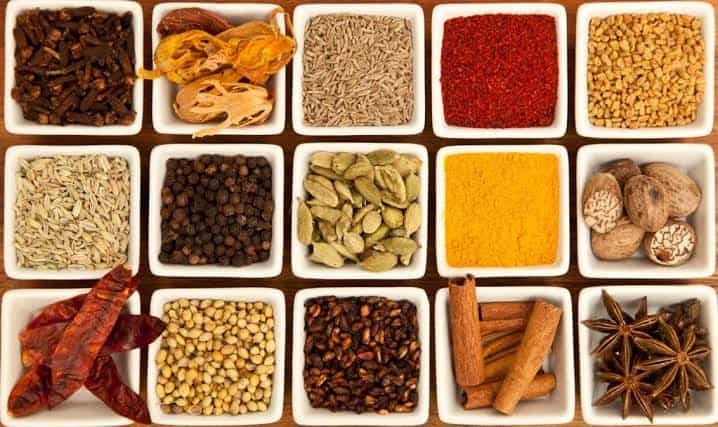
Spices in Indian Food Culture at a Glance
| Spice | Common Culinary Role | Popular Uses |
|---|---|---|
| Turmeric | Colour and earthy flavour | Dal, sabzi, curries |
| Cumin | Warm, earthy aroma | Tadka, rice, curries |
| Coriander | Mild citrusy-earthy flavour | Masalas, gravies |
| Mustard Seeds | Sharp, nutty flavour after tempering | Tadka, pickles |
| Cardamom | Sweet, floral aroma | Tea, sweets, biryani |
| Cloves | Strong, warm aroma | Rice, curries, masala chai |
| Black Pepper | Pungency and warmth | Rasam, curries, spice blends |
| Red Chilli | Heat, flavour and colour | Chutneys, curries, pickles |
| Fenugreek | Distinct bitterness and aroma | Pickles, vegetables, masalas |
| Asafoetida (Hing) | Strong savoury aroma | Dal, legumes, tempering |
Indian Food Is Not Simply About Chilli
One of the biggest misconceptions about Indian food is that it is defined by chilli heat.
In reality, traditional Indian cooking is largely about balancing different flavours and aromas.
A dish may combine:
- Earthiness from cumin
- Warmth from black pepper
- Bitterness from fenugreek
- Floral notes from cardamom
- Colour from turmeric
- Pungency from mustard
- Heat from chilli
- Sweetness from cinnamon
Two dishes can use many of the same spices yet taste completely different because the quantities, preparation techniques and cooking sequence change.
This ability to layer spices rather than simply add heat is one of the defining characteristics of Indian cooking.
The Masala Dabba Reflects Everyday Indian Cooking
The traditional masala dabba is an excellent example of how deeply spices are integrated into everyday food preparation.
Instead of keeping frequently used spices hidden in separate packets, many households place them together in a round spice box.
The exact contents vary.
A North Indian kitchen might regularly use cumin, turmeric, coriander and red chilli, while another household may keep mustard seeds, curry-related spice ingredients or different regional favourites close at hand.
The masala dabba reflects an important feature of Indian cooking: spices are not reserved for special dishes.
They are part of everyday dal, vegetables, rice, chutneys, pickles and snacks.
Tadka Shows How Cooking Technique Changes a Spice
Spices do not taste the same in every preparation.
How they are cooked can completely change their aroma and flavour.
One of India’s most important techniques is tadka, also called tempering or known by other regional names.
Whole or ground spices are briefly heated in fat to release aromatic compounds before being combined with a dish.
Depending on the region and recipe, a tadka may contain:
- Cumin seeds
- Mustard seeds
- Dried red chilli
- Curry leaves
- Hing
- Garlic
- Fenugreek seeds
The sound of mustard or cumin hitting hot oil and the aroma that immediately follows are familiar experiences in Indian kitchens.
Temperature control is important. Proper heating can release desirable aromas, while excessive heat can burn spices and create unpleasant bitterness.
Spices Create India’s Regional Food Identities
There is no single Indian spice combination.
Regional cuisines developed around local agriculture, climate, historical influences and community preferences.
North India
North Indian cooking commonly uses spices such as cumin, coriander, cloves, cardamom and warming spice blends.
Garam masala is widely associated with the region, although its recipe varies considerably between households.
South India
Mustard seeds, dried chillies, curry leaves and other aromatic ingredients are frequently used in tempering.
Black pepper also has deep historical importance, particularly in southern India.
Western India
Gujarati, Rajasthani, Maharashtrian and Goan cuisines have very different spice traditions.
Mustard, cumin, sesame, chilli and other spices appear in varying combinations, while local cuisines balance spicy, sweet, sour and savoury flavours differently.
Eastern India
Mustard has a particularly important role in several eastern cuisines.
Bengali cooking is well known for distinctive spice combinations, including panch phoron, traditionally made from five whole spices.
Northeast India
Northeastern cuisines demonstrate why Indian food should never be reduced to one idea of “masala.” Some traditions rely less heavily on complex powdered spice mixtures and highlight fresh herbs, chillies, fermented ingredients and local aromatics.
India’s spice culture is therefore a collection of regional systems rather than one universal formula.
Whole Spices and Ground Spices Serve Different Purposes
Indian cooks commonly use spices in both whole and ground forms.
Whole spices can be:
- Tempered in oil
- Added to rice
- Used during slow cooking
- Included in pickling
- Toasted before grinding
Ground spices distribute flavour more evenly throughout gravies, vegetables and marinades.
Freshly grinding spices can create a stronger aroma because volatile aromatic compounds gradually decline during prolonged storage.
This is why some traditional recipes still call for spices to be roasted and ground immediately before cooking.
However, pre-ground spices offer convenience and are perfectly practical for everyday households when stored properly.
Garam Masala Is Not One Fixed Recipe
Walk into ten Indian homes and you may find ten different versions of garam masala.
Some combinations may include:
- Cumin
- Black pepper
- Cardamom
- Cinnamon
- Cloves
- Bay leaf
- Nutmeg or mace
Recipes differ according to region, family tradition and the dish being prepared.
Some cooks add garam masala during cooking, while others use a small quantity near the end to preserve more of its aroma.
This flexibility illustrates an important feature of Indian food culture.
Traditional recipes are often frameworks passed between generations, not rigid industrial formulas.
Spices Preserve Family Memories
The smell of a particular masala can immediately remind someone of childhood meals.
A grandmother’s pickle, a mother’s dal tadka or a family biryani recipe can become strongly associated with specific spice combinations.
Traditionally, many families prepared their own:
- Garam masala
- Sambar powder
- Chai masala
- Pickling masala
- Regional curry blends
- Chutney powders
Recipes were often passed verbally or learned by watching older family members cook.
Measurements might be described as a handful, pinch or spoon rather than precise grams.
Even today, commercially packaged spice blends exist alongside homemade mixtures, allowing traditional and modern cooking habits to coexist.
Spices Are Closely Connected With Indian Festivals
Spices also play important roles in foods prepared for festivals, weddings and celebrations.
Cardamom, saffron, nutmeg, cinnamon and cloves can appear in dishes such as:
- Kheer
- Halwa
- Laddoos
- Festive rice dishes
- Masala milk
- Traditional sweets
Their aromas contribute to the sensory memory of celebrations.
For many people, the smell of cardamom or saffron is strongly associated with sweets prepared during festivals and family occasions.
Food culture is partly built through such repeated sensory experiences.
Pickling Demonstrates the Practical Role of Spices
Indian pickles show how spices contribute both flavour and, as part of a complete preparation method, preservation conditions.
Traditional recipes may combine ingredients such as:
- Mustard
- Fenugreek
- Turmeric
- Chilli
- Salt
- Oil
- Acidic ingredients
However, spices alone do not make a pickle safe or shelf-stable.
Salt concentration, acidity, moisture, hygiene, oil coverage where relevant, processing and storage all influence stability.
Different regions have developed distinctive pickle traditions using mango, lime, chilli, vegetables and many other ingredients.
These foods demonstrate how culinary flavour and practical food preservation historically developed together.
Spices Help Build Flavour Without One Dominant Ingredient
Indian cooking frequently creates complexity by combining several ingredients in relatively small quantities.
A good spice mixture should support the food rather than completely hide it.
For example, the spices used with:
- Potatoes
- Paneer
- Lentils
- Fish
- Chicken
- Chickpeas
may differ because each main ingredient has its own flavour and cooking characteristics.
Experienced cooks adjust spices according to the food rather than applying the same masala to everything.
This is one reason learning Indian cooking requires understanding technique, not simply memorising spice quantities.
India’s Spice Culture Was Shaped by Trade
Spices also connect Indian cuisine with global history.
India has been associated with international spice trade for centuries. Black pepper and other valuable spices attracted merchants through maritime and overland trading networks.
At the same time, Indian cuisine did not develop in isolation.
One of today’s most important ingredients—chilli—originated in the Americas and reached India after transoceanic exchanges began.
It eventually became so deeply integrated into regional Indian cuisines that it can now seem inseparable from them.
This is a powerful reminder that food traditions constantly evolve.
What people call “traditional” today is often the result of centuries of cultural exchange.
Spices Are Not Miracle Medicines
Indian traditions have long associated certain spices with wellness, and modern research continues to investigate many spice-derived compounds.
However, culinary spices should not automatically be treated as medicines.
A food containing turmeric, cinnamon or another spice does not automatically prevent or cure disease.
The effects observed from concentrated compounds in laboratory research cannot always be translated directly into what happens when small culinary quantities are eaten.
Spices are valuable parts of a diverse diet, but exaggerated health claims should be approached carefully.
Their most certain and immediate contribution remains something Indian cooks have understood for generations: they make food extraordinarily varied, aromatic and enjoyable.
FAQs
Q1. Why are whole spices often fried before being added to Indian dishes?
A. Heating whole spices briefly in oil or ghee can release fat-soluble aromatic compounds and change their flavour. This technique, commonly used in tadka, helps distribute the aroma throughout the dish. The spices should not be overheated or burned.
Q2. Is garam masala the same across India?
A. No. Garam masala is a broad category of spice blends rather than one standard recipe. Ingredients and proportions vary by region, household and dish, and some families prepare their own distinctive versions.
Q3. How should spices be stored in an Indian kitchen?
A. Keep spices in tightly closed containers away from excessive heat, moisture and direct sunlight. Whole spices generally retain their aroma longer than ground spices. Avoid allowing wet spoons or steam to enter spice containers.
Q4. Do Indian dishes need many spices to taste authentic?
A. Not necessarily. Some traditional dishes use several spices, while others depend on only one or two key seasonings. Authentic Indian cooking is highly regional, and good technique and balance are usually more important than simply using a large number of spices.