 By Saurav
The top cars in India for bad roads combine generous ground clearance with a suspension that actually soaks up the damage, which points to the Citroën C3 Aircross for its famously plush ride, the Honda Elevate and Tata Nexon for a mix of high clearance and soft tuning, the Mahindra XUV 3XO, Nissan Magnite, and Hyundai Creta for comfortable all-round performance, and the Mahindra Bolero Neo, Maruti Brezza, Mahindra XUV 7XO, and Toyota Innova Crysta for rugged practicality. Between potholes, unmarked speed breakers, broken edges, and monsoon-damaged tarmac, a car’s real-world comfort and durability on poor roads matter far more than its power or features. The best approach is to think of ground clearance as protection for the underbody and suspension tuning as protection for your spine, and to look for both. Prices and clearance figures below are approximate manufacturer-claimed or listing figures and vary by variant, so confirm details with a dealer.
Two Things That Matter on Bad Roads
- Ground clearance keeps the underbody, exhaust, and sump from scraping. As a rule of thumb, about 170 mm or more is the minimum for typical Indian conditions, and 180 to 200 mm or more gives a comfortable margin, especially when the car is loaded.
- Suspension tuning decides whether the car glides over a pothole or crashes through it. Soft, long-travel setups and tyres with tall sidewalls absorb impacts, while stiff suspension and low-profile tyres transmit them to passengers and risk damaging rims.
- A high number doesn’t guarantee comfort. A car with a high ride height but stiff springs can still be harsh, and a car with slightly lower clearance but excellent damping can be more comfortable at speed.
- Loaded clearance is what counts: with passengers and luggage, the suspension compresses and the effective gap shrinks.
What to Look For
- Ground clearance of at least 180 mm, and ideally 200 mm or more.
- A compliant suspension that doesn’t thump or crash over sharp-edged bumps.
- Tyres with a tall sidewall (for example 65 or 60 profile) on smaller wheels, which cushion impacts and protect rims.
- Underbody protection, such as a sump guard and plastic cladding.
- A strong body and simple, durable suspension components that tolerate abuse.
- Short front and rear overhangs, which help avoid scraping on steep ramps and speed breakers.
- Easy, affordable repairs and a good service network, especially in smaller towns.
- Good visibility, so you can spot bad patches in time.
The Ten Cars
1. Citroën C3 Aircross (about 200 mm; from about ₹8.3 lakh)
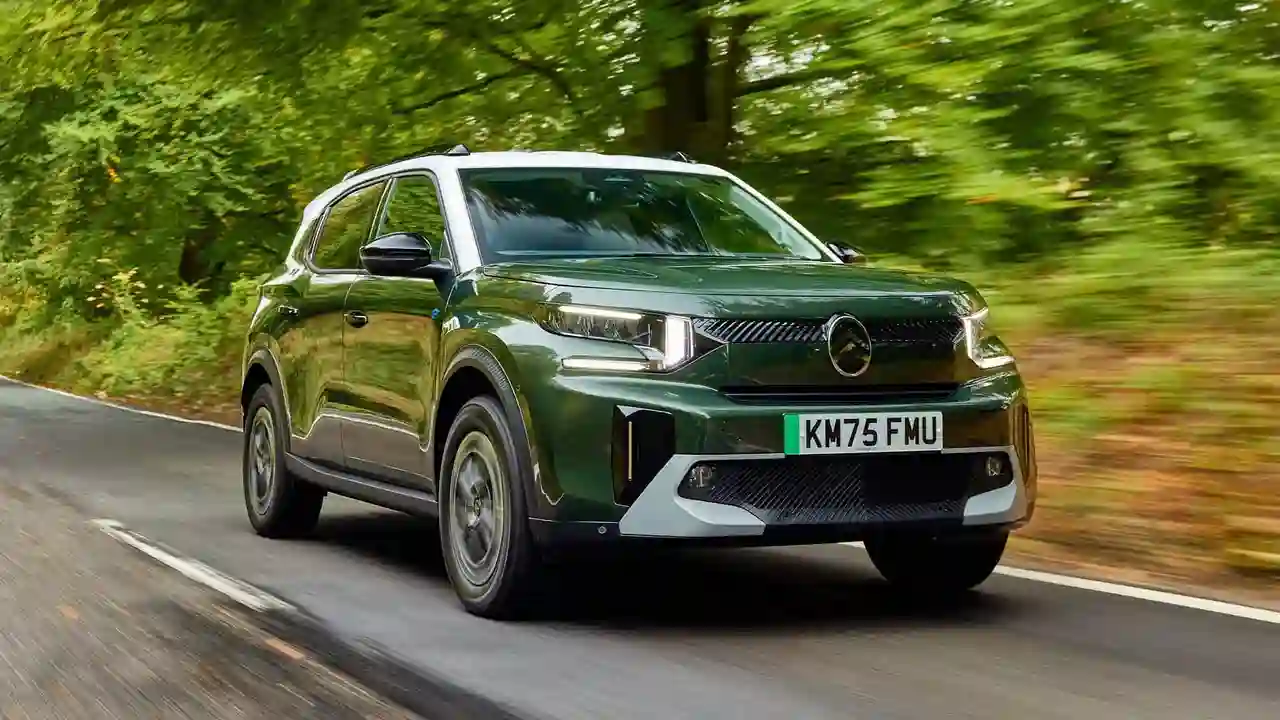
- Why it leads on ride: widely considered the best-riding car under ₹15 lakh, using Citroën’s hydraulic-cushion suspension technology that smooths out broken roads, with high ground clearance to match. It also has a big boot and a roomy five-seat cabin.
- Best for: buyers who rank ride comfort above everything else.
- Keep in mind: a smaller service network than the biggest brands. The C3 hatchback offers a similarly tuned ride with 180 mm of clearance at a lower price.
2. Honda Elevate (about 220 mm; from about ₹11.9 lakh)
- Why it stands out: among the highest ground clearance of any mid-size SUV, with a MacPherson strut front and torsion beam rear suspension tuned for a smooth, balanced ride on potholes and speed breakers.
- Best for: small families who want a refined, comfortable car for small towns and city roads.
3. Tata Nexon (about 208 mm; from about ₹7.3 lakh)
- Why it stands out: a soft suspension setup that absorbs broken roads well, high ground clearance, a solid build, and a 5-star safety rating, available in petrol, diesel, and CNG versions.
- Best for: buyers who want a safe, comfortable, affordable all-rounder.
4. Mahindra XUV 3XO (about 201 mm; from about ₹7.4 lakh)
- Why it stands out: high ground clearance, a composed ride that handles poor roads comfortably, and a lively engine, with a 5-star safety rating reported.
- Best for: buyers who want strong performance and comfort on rough roads.
5. Nissan Magnite and Renault Kiger (about 205 mm; from about ₹6.1 to 6.3 lakh)
- Why they stand out: some of the most affordable SUVs with 205 mm of clearance, with tall-sidewall tyres and a forgiving ride.
- Best for: budget buyers who want ground clearance without a big price.
6. Hyundai Creta (about 190 mm; from about ₹10.7 lakh)
- Why it stands out: a comfortable, well-damped ride, a refined cabin, and a wide choice of engines, with a strong service network.
- Best for: families who want comfort on mixed roads.
7. Mahindra Bolero and Bolero Neo (about 180 mm; from about ₹8.5 lakh)
- Why they stand out: rugged, simple, and built for rural roads, with a tough ladder-frame build and, in the latest versions, frequency-dependent damping that makes the ride more comfortable on rough surfaces.
- Best for: rural and small-town buyers who want durability and easy repairs.
- Keep in mind: older-style safety features and a more utilitarian cabin.
8. Maruti Suzuki Brezza (about 198 to 200 mm; from about ₹7.5 lakh)
- Why it stands out: high ground clearance, a comfortable ride, easy maintenance, and Maruti’s wide service network, which is a real advantage in remote areas.
- Best for: buyers who want a low-hassle, widely supported SUV.
9. Mahindra XUV 7XO (about 200 mm; from about ₹13.7 lakh)
- Why it stands out: a premium three-row SUV with Mahindra’s advanced damping system, which improves ride quality on rough roads, and a strong 5-star safety record.
- Best for: families who want a comfortable, powerful bad-road cruiser.
10. Toyota Innova Crysta and Innova Hycross (about 178 to 185 mm; from about ₹19.5 lakh)
- Why they stand out: a sturdy construction, a comfortable, well-damped ride, and a legendary reputation for durability, with strong resale value.
- Best for: large families who want a long-lasting vehicle for mixed road conditions.
- Keep in mind: their ground clearance is moderate, so drive carefully over large obstacles.
More Cars for Rough Roads
- Tata Punch (187 mm) and Hyundai Exter (185 mm): affordable micro-SUVs with good clearance.
- Maruti S-Presso (180 mm) and Tata Tiago NRG (181 mm): budget cars with raised ride heights.
- Kia Sonet (205 to 211 mm): a compact SUV with generous clearance.
- Mahindra Thar Roxx, Scorpio-N, and Maruti Jimny: capable options for the roughest conditions.
- Toyota Fortuner and Force Gurkha: high-clearance, rugged choices for demanding use.
- Tata Safari and Harrier: large SUVs with a comfortable, sturdy ride.
Matching the Car to Your Roads
Potholed city streets and speed breakers: a car with around 190 to 210 mm and a soft suspension, such as the Nexon, Elevate, or C3 Aircross, is ideal.
Village and rural roads: consider the Bolero Neo, Brezza, or Magnite for durability and clearance.
Small towns with mixed surfaces: the Creta, Elevate, and XUV 3XO offer a balance of comfort and capability.
Monsoon flooding: higher clearance helps, but remember that wading depth and air-intake height matter too, so avoid deep water.
Large families on bad roads: the XUV 7XO, Innova Crysta, or a robust SUV gives space and stability.
Tight budgets: the Magnite, Kiger, Punch, and S-Presso provide raised ride heights at low prices.
What to Do on a Test Drive
- Drive on the worst road you can find nearby, or ask the dealer to take you over some broken patches and speed breakers.
- Listen for rattles and thumps, and feel for harshness or crashiness through the seat and steering.
- Check how the car behaves at different speeds over bumps.
- Sit in the back seat, since rear passengers often feel the worst of rough roads.
- Look at tyre size and profile: taller sidewalls on smaller wheels usually ride better.
- Check the underbody protection and the approach and departure angles.
- Ask about loaded clearance and try the car with passengers.
- Check the service network and the cost of suspension parts in your area.
Driving and Care Tips for Bad Roads
- Slow down for bad patches, and brake before the bump rather than over it.
- Don’t brake hard in a pothole, which can damage the suspension and tyres.
- Avoid hitting kerbs and sharp edges.
- Keep tyres inflated to the recommended pressure, since low pressure raises the risk of rim damage and blowouts.
- Check wheel alignment and balancing regularly, especially after hitting a pothole.
- Inspect suspension bushes, shock absorbers, and tie-rod ends at services, and replace worn parts.
- Check the underbody periodically for dents, cracks, or fluid leaks.
- Don’t overload the car, which reduces clearance and strains the suspension.
- Be cautious in monsoon waterlogging, and don’t drive through water of unknown depth.
- Carry a spare tyre and puncture kit.
Costs and Considerations
- On-road price: registration, road tax, and insurance typically add 10% to 15% to the ex-showroom price.
- Repair costs: suspension components can be costly, so check warranty and spares availability.
- Insurance: consider comprehensive cover with add-ons such as tyre protection and engine protection.
- Resale value: popular, durable models hold their value better.
- Financing: calculate the total repayment, not just the EMI.
Frequently Asked Questions
Q1. Which car is best for bad roads in India?
A: The Citroën C3 Aircross is widely praised for ride quality, while the Honda Elevate, Tata Nexon, and Mahindra XUV 3XO combine high clearance with comfortable suspension.
Q2. How much ground clearance do I need for Indian roads?
A: About 170 mm is a minimum for typical conditions, with 180 to 200 mm or more giving a comfortable margin, especially when the car is loaded.
Q3. Is high ground clearance enough for a comfortable ride?
A: Not on its own, since suspension tuning and tyre sidewall height matter just as much for comfort.
Q4. Which budget car handles potholes well?
A: The Nissan Magnite, Renault Kiger, Tata Punch, and Citroën C3 offer good clearance and forgiving rides at modest prices.
Q5. How can I protect my car from pothole damage?
A: Drive slowly over bad patches, keep tyres properly inflated, avoid hard braking in potholes, and have the suspension and alignment checked regularly.