 By Kartikey Bhatt
When planning a bathroom, homeowners often spend more time selecting tiles and taps than deciding how the washbasin should be installed. Yet the basin can strongly influence how spacious, practical and easy to clean the bathroom feels. Two of the most familiar choices in Indian homes are wall-hung washbasins and pedestal washbasins.
A wall-hung basin is fixed directly to the wall, leaving the floor underneath open. A pedestal basin has a vertical pedestal beneath the bowl, creating a more traditional floor-reaching appearance while usually helping to conceal the plumbing.
Both can work well, but they solve different bathroom requirements. Wall-hung models are particularly attractive where floor space and easy cleaning matter, while pedestal basins remain popular for their familiar appearance and ability to visually hide pipework. The right choice depends on your bathroom size, wall construction, plumbing layout, cleaning preferences and overall interior style.
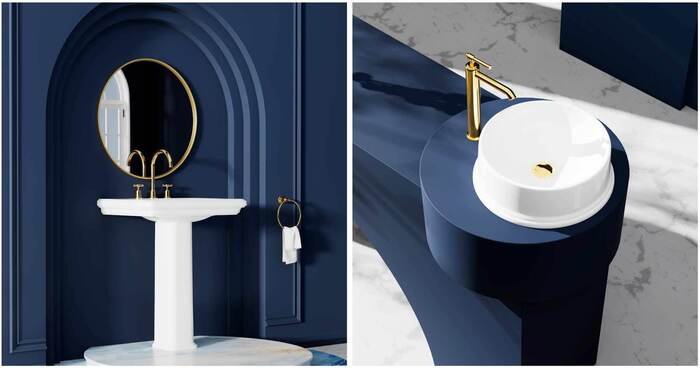
Wall-Hung vs Pedestal Washbasin: Quick Comparison
| Factor | Wall-Hung Washbasin | Pedestal Washbasin |
|---|---|---|
| Installation | Fixed directly to wall | Basin paired with pedestal |
| Floor Space | Floor remains open | Pedestal occupies floor area |
| Best For | Small and modern bathrooms | Traditional and standard bathrooms |
| Cleaning Below Basin | Very easy | Requires cleaning around pedestal |
| Plumbing Visibility | May remain visible | Usually better concealed |
| Visual Appearance | Light and minimal | Solid and traditional |
| Installation Height | Can be planned more flexibly | Influenced by basin/pedestal design |
| Wall Strength | Secure wall fixing essential | Secure fixing still important |
| Storage | Normally none | Normally none |
| Maintenance Access | Often relatively accessible | Pedestal may restrict some access |
| Accessibility Potential | Can suit accessible layouts if properly designed | Pedestal can obstruct knee space |
| Design Variety | Compact to contemporary | Classic to modern |
What Is a Wall-Hung Washbasin?
A wall-hung or wall-mounted washbasin is secured directly to the wall rather than resting on a vanity or full pedestal.
The floor underneath remains open.
Water-supply pipes and the waste connection may be visible, concealed inside the wall or covered using suitable plumbing components depending on the bathroom design.
Wall-hung basins are commonly used in:
- Compact apartment bathrooms
- Powder rooms
- Guest toilets
- Commercial washrooms
- Minimalist bathrooms
- Space-conscious renovations
Their open design is particularly useful where every centimetre of floor area matters.
What Is a Pedestal Washbasin?
A pedestal washbasin consists of a basin combined with a vertical pedestal extending towards the floor.
Many people assume the pedestal alone carries the entire weight of the basin. In practice, installation requirements vary by model, and the basin may still require secure wall fixing.
The pedestal’s major visual function is to create a finished appearance and conceal much of the drain and water connections.
Pedestal basins are commonly found in:
- Traditional Indian bathrooms
- Family bathrooms
- Independent houses
- Guest bathrooms
- Rental properties
- Bathrooms without vanity cabinets
They remain popular because they provide a straightforward, familiar sanitaryware arrangement.
Wall-Hung Basins Can Make Small Bathrooms Feel Larger
One of the strongest reasons to choose a wall-hung basin is the visual sense of space.
Because the floor continues underneath the basin, the bathroom can appear less crowded.
This is particularly valuable in urban Indian apartments where bathrooms may need to accommodate a toilet, shower and washbasin within a limited area.
The open floor also improves physical movement around the fixture.
However, do not simply choose the smallest wall-hung basin available.
An excessively small bowl can create splashing and make everyday activities such as washing your face uncomfortable.
The basin should still be appropriately sized for its intended use.
Pedestal Basins Have a More Substantial Appearance
Pedestal washbasins visually occupy more space because the fixture extends towards the floor.
This can create a balanced, substantial look in medium or larger bathrooms.
They work particularly well with traditional interiors but are not restricted to them. Modern pedestal basins are available with cleaner shapes and contemporary lines.
A pedestal can also help fill an otherwise empty wall area without requiring a complete vanity.
For homeowners who prefer a conventional bathroom appearance, this familiarity can be an advantage rather than a limitation.
Wall-Hung Basins Are Easier to Clean Underneath
Bathroom cleaning is one area where wall-hung basins have a clear practical advantage.
With no pedestal touching the floor, a mop or cleaning cloth can pass directly underneath.
This means there are fewer awkward edges where:
- Dust
- Hair
- Soap residue
- Moisture
- Bathroom grime
can accumulate.
The advantage becomes particularly noticeable in compact wet bathrooms where the floor is cleaned frequently.
Pedestal basins require cleaning around the pedestal base and the narrow area between the pedestal and wall.
These areas are manageable, but they involve slightly more effort.
Pedestal Basins Hide Plumbing More Effectively
Visible pipes can spoil the appearance of an otherwise well-designed bathroom.
A pedestal provides a convenient way of visually concealing much of the basin plumbing without installing a vanity cabinet.
This can include portions of the:
- Waste pipe
- Trap
- Water connections
With a wall-hung basin, exposed plumbing is more likely unless connections are concealed inside the wall or decorative plumbing components are used.
If you want the minimal appearance of a wall-hung basin, discuss the plumbing arrangement before tiles are installed.
Trying to conceal pipes after the bathroom is complete can be more difficult and expensive.
Wall Strength Matters More With Wall-Hung Basins
A wall-hung basin depends heavily on secure installation.
The wall, mounting hardware and fixing method must be suitable for the load.
This is particularly important when installing onto partitions or other wall systems that may require reinforcement.
Poor fixing can cause:
- Basin movement
- Cracked tiles
- Loose mounting points
- Failed sealant
- Damage to plumbing
A basin should never be mounted based on guesswork.
Use the manufacturer’s recommended fixing system and ensure the supporting structure is suitable.
Pedestal basins also require proper installation. The presence of a pedestal should not be treated as permission to ignore recommended wall fixings.
Installation Height Is More Flexible With Wall-Hung Models
Because a wall-hung basin is mounted directly to the wall, its height can often be planned with greater flexibility within the limits of the product and plumbing arrangement.
This can be useful when designing for:
- Tall or short household members
- Children
- Older adults
- Certain accessibility requirements
Pedestal models are less flexible because the height is largely determined by the dimensions of the matching basin and pedestal.
However, accessibility involves much more than basin height. Approach space, knee clearance, tap operation and surrounding fixtures also matter.
For a genuinely accessible bathroom, follow appropriate accessibility standards rather than simply changing basin height.
Neither Option Provides Much Storage
If bathroom storage is a priority, neither a basic wall-hung nor pedestal basin is ideal.
Neither normally provides meaningful space for:
- Towels
- Toiletries
- Cleaning products
- Grooming equipment
A vanity basin may be more suitable where concealed storage is essential.
However, you can sometimes combine a wall-hung basin with separate wall-mounted shelves or cabinets without occupying floor space.
This can work particularly well in small bathrooms.
Wall-Hung Designs Suit Modern Interiors
Wall-hung basins are commonly associated with contemporary bathroom design because of their open, minimal appearance.
They pair particularly well with:
- Floating mirrors
- Wall-mounted taps
- Large-format tiles
- Minimal accessories
- Concealed plumbing
Their visual lightness can make a compact room feel cleaner and less cluttered.
Pedestal basins tend to create a more traditional visual impression, although modern sculptural pedestal designs can also become a statement feature in contemporary bathrooms.
Style should therefore be considered together with practicality rather than in isolation.
Maintenance Access Can Be Different
A wall-hung basin with accessible plumbing can make it relatively easy for a plumber to inspect the waste connection and water lines.
With a pedestal basin, the pedestal may need to be moved or carefully worked around during certain repairs.
This does not make pedestal basins difficult to maintain, but access should be considered during installation.
Do not permanently trap important plumbing connections behind poorly planned sealant, cabinetry or decorative panels.
Future maintenance should always remain possible.
Which Is Better for Hard-Water Areas?
The basin installation style itself does not solve hard-water problems.
Mineral deposits can form on either type around:
- Tap outlets
- Waste fittings
- Basin surfaces
- Pipe connections
The basin material and cleaning routine matter more.
If the basin is ceramic, regular gentle cleaning can help prevent heavy mineral buildup.
A wall-hung design may make floor cleaning easier, but it does not reduce the hardness of the water.
Which Washbasin Should You Choose?
Choose a wall-hung washbasin when:
- Your bathroom is compact.
- You want more visible floor area.
- Easy floor cleaning is important.
- You prefer a minimalist appearance.
- The wall can safely support the installation.
- Plumbing can be arranged neatly.
Choose a pedestal washbasin when:
- You prefer a traditional appearance.
- You want plumbing visually concealed.
- Floor space is not extremely limited.
- You do not require vanity storage.
- You want a simple, familiar bathroom arrangement.
For many small Indian apartments, wall-hung basins offer a practical space-saving advantage. In medium-sized family bathrooms where visible plumbing needs to be hidden without installing cabinetry, a pedestal basin can still be an excellent choice.
The better basin is ultimately the one that fits the room dimensions, plumbing arrangement and daily needs rather than whichever design happens to be more fashionable.
FAQs
1. Is a wall-hung washbasin strong enough for everyday use?
A. Yes, when the basin is correctly installed on a suitable supporting wall using the manufacturer’s recommended fixings. Poor installation or an unsuitable wall can compromise stability, so professional installation is advisable.
2. Does a pedestal support the entire weight of a washbasin?
A. Not necessarily. Installation methods vary, and many pedestal basin systems still require the basin to be securely fixed to the wall. Always follow the manufacturer’s installation instructions.
3. Which washbasin is better for a very small bathroom?
A. A compact wall-hung basin is usually more space-efficient because the floor remains open. A corner wall-mounted basin can save even more space where the layout is extremely tight.
4. Can I replace a pedestal basin with a wall-hung basin?
A. Usually possible, but the wall strength, fixing points, water connections and waste-pipe position must be checked first. Removing the pedestal may also expose plumbing or unfinished tiles that were previously hidden.