 By Kartikey Bhatt
A bedsheet can look lovely in its packet and still leave you wrestling with loose corners every morning. Often, the problem is the size. A sheet that barely covers your mattress cannot stay tucked in, while too much fabric can gather beneath you.
The easiest way to buy single bedsheets is to start with three measurements: mattress width, length and depth. Once you have these, you can judge the actual dimensions on a product label instead of relying on the word “single”.
What Size Is a Single Mattress in India?
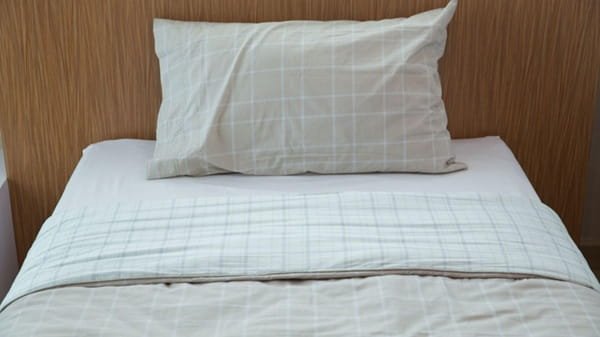
A common Indian single mattress measures 36 inches wide and 72 inches long. However, longer options, including 75 inches and 78 inches, are also available. Narrower mattresses may measure 30 inches across.
Here are some mattress dimensions you may encounter:
| Mattress size in inches | Approximate size in centimetres |
| 30 by 72 | 76 by 183 |
| 36 by 72 | 91 by 183 |
| 36 by 75 | 91 by 191 |
| 36 by 78 | 91 by 198 |
These are mattress measurements, not flat bedsheet measurements. Your sheet needs either extra fabric for tucking or fitted corners designed for those dimensions.
How to Measure Your Mattress Correctly
Use a flexible measuring tape and remove your existing bedsheet before you begin. Measure the mattress itself rather than the outer bed frame.
- Measure the width: Run the tape across the mattress from one side to the other.
- Measure the length: Measure from the head of the mattress to its foot.
- Measure the depth: Measure vertically from the bottom edge to the sleeping surface.
- Include added layers: Keep your topper and mattress protector in place when checking the total depth.
Write down all three figures in the same unit. If a listing uses centimetres, multiply your inch measurements by 2.54. Do not round down when checking whether a fitted sheet can accommodate your mattress.
Flat or Fitted: Which Style Suits Your Bed?
Flat sheets give you adjustable coverage
A flat sheet is a rectangular piece of fabric without elasticated corners. You spread it over the mattress and tuck the edges underneath.
It works well when you prefer adjusting the tuck yourself. However, the finished fabric dimensions must allow for the mattress sides as well as the sleeping surface.
Fitted sheets follow the mattress shape
A fitted sheet has shaped corners and elastic that holds it around the mattress. Its listed width and length usually refer to the mattress it fits, rather than the total fabric spread.
Check the maximum supported mattress depth separately. Even when the top measurements match, shallow corners may pull free from a thick mattress.
How Much Extra Fabric Does a Flat Sheet Need?
For a flat sheet, calculate the coverage rather than guessing from a photograph.
Add the mattress width, twice its depth and your preferred tuck on both sides. Use the same approach for length if you want to tuck both ends.
For example, take a mattress measuring 36 by 72 inches, with a depth of 6 inches. Allowing 6 inches underneath each edge gives these planning measurements:
- The required width is 36 plus 12 plus 12, which equals 60 inches.
- The required length is 72 plus 12 plus 12, which equals 96 inches.
A 60 by 96 inch sheet would therefore meet this example before allowing for shrinkage. This is a calculation, not a universal size recommendation. You may need less length if you leave the head end untucked.
Why Mattress Depth Changes the Fit
Thickness is easy to overlook, especially when replacing an older mattress with a taller one.
Suppose your mattress is 8 inches deep and your topper adds another 2 inches. Your fitted sheet must accommodate a combined depth of 10 inches, plus any meaningful thickness from other layers.
Terms such as “deep pocket” are not enough on their own. Read the actual depth limit. Different fitted sheets can support different thicknesses, even when their width and length are identical.
Do Imported Single Sheets Fit Indian Mattresses?
An imported sheet labelled “single” may follow a different sizing system. For example, a fitted sheet designed for a mattress measuring 90 by 200 centimetres does not exactly match one measuring 91 by 183 centimetres. The extra length can affect how neatly it sits. Compare the measurements rather than treating “single” and “twin” as interchangeable labels across retailers.
What Else Should You Check Before Buying?
Once the dimensions work, examine the details that affect everyday use.
- Read the fabric label: Check the fibre composition rather than assuming a sheet is pure cotton from its appearance.
- Check washing instructions: Follow the stated temperature and drying method to reduce avoidable changes in fit.
- Ask about shrinkage: If the seller gives a shrinkage allowance, include it in your calculations. Do not assume every cotton sheet shrinks equally.
- Check the contents: Confirm whether the pack includes a pillow cover and whether its dimensions suit your pillow.
- Read the return policy: Check whether washing or opening the packaging affects your ability to return an unsuitable size.
When comparing single bedsheets online, use the dimensions for the exact variant in your basket. A general size chart may cover several options.
How to Check the Fit at Home
Before washing, check the label and compare the sheet with your recorded measurements. Try it on the mattress if the return conditions allow.
A fitted sheet should cover every corner without forcing the mattress edges upwards. A flat sheet should leave enough fabric for your intended tuck without creating a bulky fold beneath your back.
If corners slip, check the depth and orientation first. If fabric gathers, check whether the sheet is too large or unevenly tucked. These checks help identify the problem before you buy accessories.
Make Your Next Purchase Easier
Save your mattress measurements on your phone, including the topper depth. Keep the dimensions of any sheet that fits well, too. Next time, you can compare numbers quickly and choose a design you enjoy without repeating the measuring process.