 By Saurav
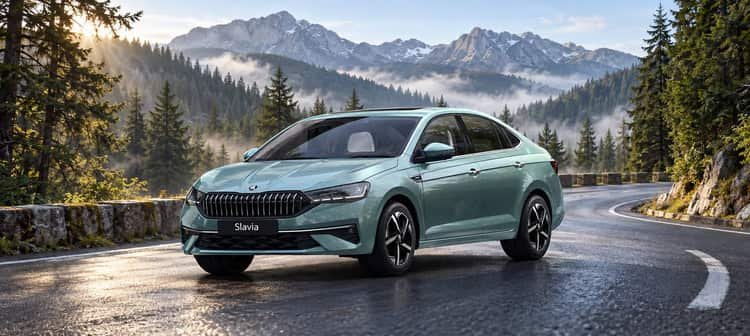
The top cars in India for highway travel are the ones that feel calm and planted at 100 km/h, have enough pull to overtake safely without drama, and stop confidently when the road ahead suddenly slows, and that points to the Skoda Slavia and Volkswagen Virtus, Hyundai Verna, and Honda City among sedans, the Skoda Kylaq, Hyundai Creta, and Kia Seltos among compact and mid-size SUVs, and the Tata Harrier and Safari, Mahindra XUV 7XO, Mahindra Scorpio-N, and Toyota Fortuner among bigger, torquier SUVs. India’s expressway network has grown quickly, which makes highway-friendly cars more valuable than ever, but the rules still matter: for cars, the maximum is generally 120 km/h on expressways where signage permits and 100 km/h on national highways, state and local limits may be lower, and conditions often call for slower speeds. Prices and power figures below are approximate manufacturer-claimed or listing figures and vary by variant, so confirm details with a dealer.
What the Law and Physics Say
- Legal limits: the Union transport ministry’s norms set 120 km/h for cars on access-controlled expressways and 100 km/h on national highways, while states and local authorities can set lower limits. Always follow the posted signs.
- Stopping distance: at about 100 km/h, a car needs roughly 120 metres to stop, and at 120 km/h about 170 metres, which is almost two football fields, so keeping a generous gap matters more than raw speed.
- Weather and visibility: rain, fog, and night driving call for slower speeds, whatever the limit.
- A fast car isn’t a licence to speed: the goal of a highway car is comfort, stability, and a reserve of power for safe overtaking, not breaking limits.
What Makes a Good Highway Car
- Stability: a long wheelbase, low centre of gravity (or well-tuned suspension), and precise steering keep the car steady at speed and in crosswinds.
- Overtaking reserve: a turbo-petrol or torquey diesel that can accelerate cleanly from 80 to 110 km/h when loaded.
- Gearbox: a 6-speed manual or a smooth automatic that downshifts quickly.
- Brakes and tyres: strong brakes and good-quality tyres in good condition.
- Refinement: low wind and road noise reduces fatigue.
- Driver aids: cruise control at minimum, ideally adaptive cruise and lane-keeping.
- Safety: six airbags, stability control, and strong crash-test ratings.
- Comfort: supportive seats and a ride that handles joints and rough patches.
- Fuel range: a big tank and decent efficiency reduce stops.
The Ten Cars
Skoda Slavia and Volkswagen Virtus (from about ₹10.3 to 11.6 lakh; 1.5 TSI recommended)
- Highway strengths: among the most planted, confidence-inspiring cars in the price range, with a punchy 1.5-litre turbo-petrol of roughly 150 PS, a 521-litre boot, and 5-star Global NCAP ratings.
- Watch out for: the 1.0-litre versions are better suited to relaxed cruising than hard overtaking.
- Best for: drivers who enjoy covering distance in a stable, quick sedan.
Hyundai Verna (from about ₹11 lakh; turbo-petrol for the best highway manners)
- Highway strengths: a long, low sedan with a strong 1.5-litre turbo of around 160 PS, a big 528-litre boot, a comfortable rear seat, and a 5-star rating reported, with driver aids on top trims.
- Watch out for: the naturally aspirated engine is gentler, so choose based on how you drive.
- Best for: families who want a quick, comfortable sedan with strong features.
Honda City (from about ₹11.8 lakh)
- Highway strengths: a refined, composed sedan with a smooth 1.5-litre engine of roughly 121 PS, a 506-litre boot, a class-best rear seat, and Honda Sensing driver aids on upper variants. The City e:HEV hybrid claims over 26 km/l.
- Watch out for: it’s more relaxed than sporty, so overtaking calls for planning.
- Best for: buyers who want comfort, reliability, and efficiency.
Skoda Kylaq (from about ₹7.6 lakh)
- Highway strengths: a compact SUV with surprising stability for its size, a 1.0-litre turbo of roughly 115 PS, a 5-star Bharat NCAP rating, and six airbags standard.
- Watch out for: rear space is tight for tall passengers, and it’s a three-cylinder engine, so loaded overtaking needs patience.
- Best for: buyers who want a safe, stable compact SUV with a European feel.
Hyundai Creta (from about ₹10.7 lakh; turbo-petrol or diesel)
- Highway strengths: a refined, stable SUV with a smooth ride, a 433-litre boot, strong diesel and 160 PS turbo options, ADAS on higher variants, and a 5-star Bharat NCAP rating reported.
- Watch out for: the best-equipped variants cost well above ₹20 lakh.
- Best for: small families who want an all-round highway companion.
Kia Seltos (from about ₹10.8 lakh; turbo-petrol or diesel)
- Highway strengths: a comfortable, quiet SUV with a strong 1.5-litre turbo of around 160 PS, a smooth automatic, and a long equipment list including Level 2 ADAS on top trims.
- Watch out for: rear space is similar to the Creta’s.
- Best for: buyers who want a feature-rich, relaxed cruiser.
Tata Harrier and Tata Safari (from about ₹13.3 lakh)
- Highway strengths: large, stable SUVs with a strong 2.0-litre diesel of about 170 PS and a torque-rich character, top crash-test scores, six airbags, and available ADAS.
- Watch out for: the Safari has a small boot with all three rows in use.
- Best for: families who want a big, safe highway cruiser.
- Mileage: roughly 14.5 to 16.3 km/l claimed.
Mahindra XUV 7XO (from about ₹13.7 lakh)
- Highway strengths: a powerful, technology-packed three-row SUV with diesel outputs up to roughly 185 PS and strong torque, a 5-star rating reported, and advanced driver aids on higher trims.
- Watch out for: the third row suits children better than tall adults.
- Best for: buyers who want effortless performance and features.
Mahindra Scorpio-N (from about ₹13.5 lakh)
- Highway strengths: a body-on-frame SUV with a strong diesel of roughly 175 PS and up to about 400 Nm of torque, a high seating position, and a 5-star Global NCAP adult rating, good for mixed highway and rough-road trips.
- Watch out for: a bulkier, more truck-like feel with more body roll than car-based SUVs.
- Best for: families who want a tough, torquey highway SUV.
Toyota Fortuner (from about ₹34 lakh)
- Highway strengths: a body-on-frame SUV with a strong 2.8-litre diesel of about 204 PS and around 500 Nm in automatic form, 225 mm of ground clearance, and a reputation for effortless, dependable touring.
- Watch out for: a high price and a firmer ride.
- Best for: buyers who want a commanding, durable highway machine.
Also Worth Considering
- Toyota Innova Hycross and Innova Crysta: comfort-first people-movers for long family trips.
- Maruti Suzuki Victoris and Grand Vitara strong hybrids: efficient, relaxed cruisers.
- Mahindra Thar Roxx diesel: a lifestyle SUV with strong torque.
- Tata Curvv and Sierra: stylish SUVs with good safety credentials.
- Skoda Kushaq and VW Taigun: driver-focused SUVs with turbo engines.
- Hyundai Creta N Line and similar sporty variants: firmer, quicker versions.
Matching the Car to Your Highway Habits
Mostly expressway and national highway runs: a turbo-petrol sedan like the Slavia, Virtus, or Verna gives stable, quick cruising.
Mixed roads with the occasional bad patch: a mid-size SUV such as the Creta or Seltos handles both well.
Family trips with luggage: a larger SUV or MPV with a diesel engine offers torque and space.
Frequent long hauls: consider efficiency, so strong hybrids or efficient diesels cut fuel stops.
Hilly highways: torque matters, so diesel SUVs or turbo-petrols with automatic gearboxes help.
Budget-focused highway use: the Kylaq and sedans like the City give strong stability without a big outlay.
Highway Readiness Checklist
- Tyres: check tread, pressure (including the spare), and age, and adjust for load.
- Brakes: have pads and discs inspected, since highway braking is demanding.
- Alignment and balancing: a well-aligned car tracks straight at speed.
- Fluids: top up engine oil, coolant, brake fluid, and washer fluid.
- Lights and wipers: make sure all work properly.
- Load: distribute weight evenly, with heavy items low and centred.
- Emergency kit: a puncture kit or spare, jack, torch, warning triangle, first-aid kit, and phone charger.
- FASTag and documents: ensure your FASTag is funded and your papers are in order.
Highway Driving Habits That Keep You Safe
- Keep a generous following distance, at least two to three seconds, and more in rain.
- Stay in your lane, overtake only on the right where permitted, and return to the left lane afterwards.
- Use cruise control on clear stretches, and stay alert.
- Take a break every two hours, and don’t drive when drowsy.
- Slow down in poor weather, at night, and near toll plazas or junctions.
- Watch for stray animals, slow vehicles, and vehicles stopped on the shoulder.
- Don’t tailgate or flash aggressively.
- Wear seatbelts in every seat, and secure children in proper car seats.
- Obey the posted speed limits, which differ by road and state.
Frequently Asked Questions
Q1. What is the speed limit for cars on Indian highways?
A. Cars are generally limited to 100 km/h on national highways and up to 120 km/h on access-controlled expressways where signage permits, with state and local limits sometimes lower.
Q2. Which car is best for expressway driving?
A. Stable, powerful sedans like the Skoda Slavia, Volkswagen Virtus, and Hyundai Verna Turbo are favourites, while larger SUVs like the Tata Harrier and Toyota Fortuner also perform well on expressways.
Q3. Is diesel or petrol better for highway driving?
A. Diesel offers strong torque and efficiency for big SUVs, while modern turbo-petrol engines are smoother and quicker, so the better choice depends on the car and your usage.
Q4. Do I need ADAS for highway travel?
A. It’s not essential, but features like adaptive cruise control and lane-keeping assistance can reduce fatigue, as long as you stay alert and remain in control of the vehicle.
Q5. How often should I stop on a long highway drive?
A. Taking a break every two hours or roughly every 150 to 200 km can help you stay alert and safe during a long highway journey.