 By Kartikey Bhatt
Walk into an older independent house, a modern apartment, a hotel bathroom or even a newly designed luxury home in India, and there is a good chance you will find a ceramic washbasin. Bathroom styles have changed considerably over the years, with countertop bowls, floating vanities, matte finishes and designer fittings becoming increasingly popular. Yet ceramic continues to hold its place.
The reason is practical. A washbasin is exposed every day to water, soap, toothpaste, cosmetics, cleaning products and frequent handwashing. Indian homes may also deal with hard water, dust, humidity and intensive family use. Ceramic sanitaryware offers a smooth surface, good resistance to everyday staining, straightforward cleaning and a huge variety of shapes and installation styles.
Alternatives such as natural stone, glass, metal and solid-surface materials can create striking bathrooms, but ceramic remains an attractive combination of practicality, availability, appearance and value. That balance explains why it continues to be one of the most familiar washbasin choices across India.
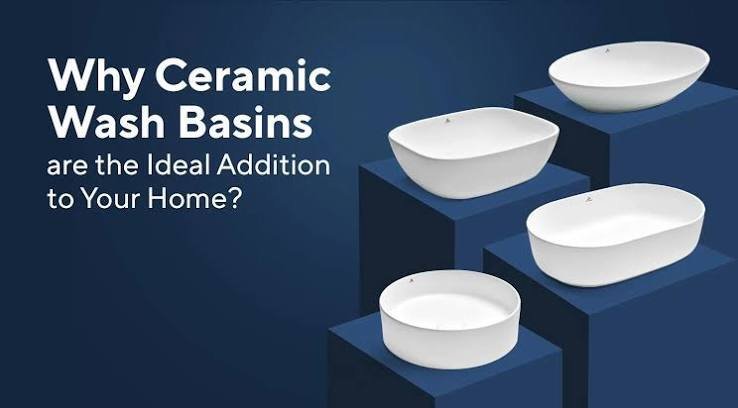
Ceramic Washbasins: Quick Overview
| Factor | Ceramic Washbasin Performance |
|---|---|
| Everyday Durability | Very good with normal use |
| Cleaning | Generally easy |
| Water Resistance | Excellent |
| Stain Resistance | Good on a quality glazed surface |
| Hard-Water Maintenance | Deposits can form but are usually visible and cleanable |
| Design Variety | Very wide |
| Colour Options | White is most common; other options available |
| Price Range | Budget to premium |
| Heat Resistance | Good for normal bathroom use |
| Installation Options | Wall-mounted, pedestal, countertop, under-counter and more |
| Main Limitation | Can chip or crack from strong impact |
| Best For | Most residential bathroom applications |
Ceramic Has a Surface Well Suited to Bathrooms
The most important reason ceramic works so well in bathrooms is its finished surface.
Sanitary ceramic products are generally manufactured with a glazed surface that is smooth and resistant to normal water exposure.
This matters because washbasins constantly come into contact with:
- Water
- Handwash
- Toothpaste
- Shaving products
- Cosmetics
- Hair products
- Everyday bathroom dirt
A relatively smooth, non-absorbent finished surface makes routine cleaning easier than it would be on many porous materials.
That does not mean a ceramic basin never becomes dirty. Soap residue, mineral deposits and grime can still accumulate.
The advantage is that regular cleaning is usually straightforward.
Ceramic Is Easy to Maintain
Most Indian households want a bathroom that can be cleaned without specialised maintenance products.
Ceramic performs well in this respect.
For routine care, gentle bathroom cleaning methods are usually sufficient.
A few simple habits help:
- Rinse away toothpaste and soap residue.
- Wipe the basin regularly.
- Do not allow hard-water deposits to build up for months.
- Avoid highly abrasive tools that may affect the finish.
- Follow the manufacturer’s instructions for cleaning products.
Compared with some decorative natural materials that require sealing or specialised care, ceramic is relatively uncomplicated.
This is particularly valuable in busy family bathrooms.
It Handles Daily Family Use Well
A family washbasin may be used dozens of times every day.
Children wash their hands, adults brush their teeth, someone shaves in the morning, and guests use the same basin throughout the day.
A bathroom material therefore needs to tolerate repeated exposure to water and normal household products.
Quality ceramic sanitaryware is designed for this kind of use.
It does not need polishing every few days or special protection from ordinary water.
This low-maintenance durability is one reason ceramic remains common in:
- Family bathrooms
- Guest toilets
- Apartments
- Hotels
- Offices
- Restaurants
- Public washrooms
The material works across both residential and commercial settings.
White Ceramic Makes Bathrooms Feel Clean and Bright
White remains the most familiar colour for ceramic sanitaryware.
There is a practical design reason for its popularity.
White reflects light and can make a bathroom appear brighter and visually cleaner.
This is especially useful in Indian apartments where bathrooms may have limited natural light.
White ceramic also works with almost any combination of:
- Wall tiles
- Floor tiles
- Wood-finish vanities
- Marble-look surfaces
- Chrome taps
- Black fittings
- Coloured walls
Because it is visually neutral, homeowners can renovate other parts of the bathroom without necessarily replacing the basin.
Ceramic Works With Almost Every Bathroom Style
Ceramic does not mean old-fashioned.
Manufacturing methods now allow ceramic washbasins to be produced in numerous forms.
Popular options include:
- Round countertop bowls
- Oval basins
- Rectangular basins
- Wall-mounted models
- Pedestal basins
- Semi-recessed designs
- Under-counter basins
- Drop-in basins
- Compact corner basins
- Designer vessel basins
This variety allows the same broad material category to work in a ₹budget-focused bathroom as well as a premium interior.
A traditional pedestal basin and a thin-edged countertop vessel may both be ceramic while looking completely different.
Ceramic Offers Options Across Different Budgets
Another major advantage is market availability.
Ceramic sanitaryware is widely produced and sold in India, which gives homeowners choices across a broad price range.
A basic basin can be relatively economical, while premium designer products may cost substantially more because of their shape, finish, manufacturing quality or brand.
This means homeowners do not have to change materials simply because they are working within a particular budget.
The same general material can be used for:
- Rental properties
- First homes
- Renovations
- Premium apartments
- Luxury bathrooms
Instead of comparing only price, check manufacturing quality, glaze consistency, dimensions, warranty and installation requirements.
Hard Water Does Not Make Ceramic Maintenance-Free
Many Indian cities and towns have hard water.
Over time, dissolved minerals can leave white or chalky deposits around:
- Tap bases
- Waste outlets
- Basin edges
- Areas where water regularly dries
These deposits can appear on ceramic just as they can on taps and shower fittings.
Ceramic’s smooth surface can make routine cleaning manageable, but it does not prevent mineral deposits from forming.
The best strategy is regular maintenance.
Wiping wet areas before heavy deposits accumulate is generally easier than trying to remove thick scale later.
Avoid using extremely aggressive chemicals without checking whether they are suitable for the basin, fittings and surrounding surfaces.
Ceramic Does Not Rust
Unlike ferrous metal, ceramic itself does not rust.
That is an obvious advantage in a constantly wet environment.
However, a washbasin installation includes other components that may be made from different materials.
These include:
- Tap
- Waste coupling
- Fixing hardware
- Flexible hoses
- Drain components
If you see rust-coloured staining around a ceramic basin, the source may be a metal component or water chemistry rather than the ceramic itself.
The complete installation therefore needs appropriate-quality plumbing fittings.
Ceramic Can Handle Normal Bathroom Temperatures
Washbasins are frequently exposed to warm and cold water.
Ceramic sanitaryware handles ordinary bathroom temperature changes well when correctly manufactured and used.
However, a washbasin should not be treated as indestructible.
Extremely unusual thermal shock or inappropriate use can potentially cause damage.
For everyday activities such as handwashing and face washing, normal hot and cold water use is generally not a problem.
More important is ensuring that the tap, mixer, seals and connected plumbing are also suitable for the hot-water system.
Ceramic Has Good Resistance to Everyday Staining
A quality glazed ceramic surface does not readily absorb common bathroom substances under normal use.
This helps protect against persistent staining from many everyday products.
However, leaving strongly coloured substances or harsh chemicals sitting on the surface unnecessarily is still poor practice.
If something spills, clean it promptly.
Hair dye, certain cosmetics and chemical cleaners deserve particular care because they may affect surfaces, sealants or nearby materials.
The best maintenance rule is simple: do not allow avoidable residue to remain for long periods.
Ceramic Is Hygienic When Cleaned Properly
Bathroom hygiene depends heavily on surface condition and cleaning.
A smooth glazed basin provides fewer obvious places for dirt to become embedded than a rough or porous surface.
Regular cleaning helps remove:
- Soap residue
- Toothpaste
- Dirt
- Cosmetic residue
- Organic matter
However, describing any washbasin as automatically “germ-free” would be misleading.
Ceramic still requires cleaning.
Areas around the drain, overflow opening, tap base and basin-to-counter joint deserve particular attention because residue can collect there.
Good design and regular maintenance work together.
The Material Pairs Well With Popular Tap Finishes
Ceramic’s neutral appearance makes it easy to combine with changing bathroom trends.
A white basin can work with:
- Chrome
- Matte black
- Brushed finishes
- Gold-toned finishes
- Antique-style fittings
This allows homeowners to update the personality of a bathroom through taps, mirrors and accessories while keeping the basin relatively timeless.
For long-term renovations, this flexibility can be valuable.
A highly unusual basin colour may limit future design choices, whereas neutral ceramic is easier to coordinate.
Ceramic Is Heavy and Needs Proper Installation
One limitation of ceramic is weight.
A substantial ceramic basin requires appropriate support.
Wall-mounted models need secure fixing to a suitable wall, while countertop basins require a stable vanity surface.
Installation mistakes can lead to:
- Movement
- Poor alignment
- Failed sealant
- Leakage
- Stress around mounting points
The basin should never depend on weak fixings or unsuitable cabinetry.
For larger or heavier models, professional installation is advisable.
Ceramic Can Chip or Crack
Ceramic is hard, but hardness should not be confused with impact resistance.
A heavy object dropped into the basin can potentially chip or crack it.
Common risks include dropping:
- Heavy glass bottles
- Metal grooming equipment
- Tools during installation
- Large decorative containers
A minor surface mark may be cosmetic, but a structural crack can eventually cause leakage or failure.
A badly cracked basin generally requires replacement rather than an improvised repair.
Ceramic vs Glass Washbasins
Glass vessel basins can create a striking contemporary appearance.
However, they may show water spots and fingerprints more easily, depending on the finish and water quality.
Ceramic is generally more familiar and forgiving for everyday family use.
Choose glass primarily when its visual effect justifies the additional cleaning attention and the product is designed appropriately for bathroom use.
Ceramic vs Natural Stone
Natural stone basins can be beautiful because every piece has distinctive colour and texture.
But stone maintenance varies significantly by material.
Some natural stones may require:
- Sealing
- Special cleaning products
- Protection from acidic substances
- More careful maintenance
Ceramic is usually simpler for homeowners who want a predictable, easy-care surface.
Stone is more about distinctive character; ceramic is usually about practical consistency.
Ceramic Remains a Balanced Choice
The continued popularity of ceramic washbasins is not simply because Indian homeowners are accustomed to them.
Ceramic continues to solve everyday bathroom requirements effectively.
Its main advantages include:
- Smooth, easy-to-clean surface
- Good resistance to everyday water exposure
- No rusting of the ceramic body
- Wide design availability
- Options across budgets
- Compatibility with many bathroom styles
- Straightforward maintenance
- Long-term visual versatility
Its limitations—mainly weight and vulnerability to strong impact—are usually manageable through correct installation and normal care.
For homeowners who want a basin that looks good without demanding complicated maintenance, ceramic remains one of the most practical choices available for Indian bathrooms.
FAQs
Q1. Are ceramic washbasins good for hard-water areas?
A. Yes, but hard water can still leave mineral deposits on the glazed surface and around taps or drains. Regular wiping and suitable cleaning can prevent heavy scale from becoming difficult to remove.
Q2. Can a cracked ceramic washbasin be repaired?
A. Very minor cosmetic damage may sometimes be treated with specialised repair products, but a significant structural crack can compromise the basin. Replacement is generally safer when the crack is deep, spreading or causing leakage.
Q3. Which is better for daily use: ceramic or glass washbasins?
A. For many family bathrooms, ceramic is the more straightforward choice because it is familiar, durable and relatively easy to maintain. Glass can provide a distinctive appearance but may require more frequent cleaning to manage visible water marks.
Q4. Do ceramic washbasins become yellow over time?
A. Quality ceramic does not inherently have to turn yellow with normal use, but mineral deposits, cleaning residue and accumulated grime can cause discolouration. Regular cleaning and attention to hard-water deposits help maintain the original appearance.