 By Akash Sharma
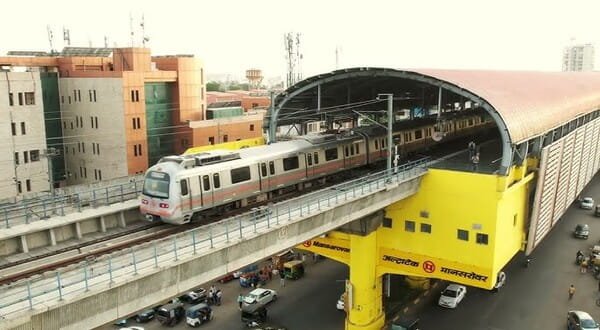
 Mansarovar Metro Station is the western terminal station on the Pink Line (East-West Corridor) of the Jaipur Metro Rail system in Rajasthan. Serving as a major gateway for the rapidly growing western suburbs of Jaipur, it has become an essential transit hub for residents, students, and daily commuters. Inaugurated on June 3, 2022, the station has significantly improved connectivity between the western parts of the city and the central and eastern zones, reducing travel time and easing road congestion on Ajmer Road and nearby corridors.
Location
Mansarovar Metro Station is located in the Mansarovar area of Jaipur, Rajasthan, with the pincode 302020. It is strategically positioned near the intersection of Ajmer Road and the Mansarovar main road. The station’s approximate geographic coordinates are 26.854°N, 75.766°E.
The surrounding locality is a well-developed residential and commercial zone featuring mid-rise and high-rise apartment societies, educational institutions, hospitals, and local markets. Key nearby landmarks include Mansarovar Lake, Kesar Vihar, Padmani Vihar, and several schools and colleges. The elevated structure of the station offers commuters panoramic views of western Jaipur’s urban landscape, with wide roads, green spaces, and ongoing residential development visible all around. Its position as the western terminal makes it highly convenient for residents of Mansarovar, Muhana, and nearby areas who previously relied on congested road transport for commuting to the city centre.
Connectivity
Mansarovar Metro Station provides excellent connectivity as the western terminal of the Pink Line. It directly links the western suburbs with central Jaipur and the eastern parts of the city. Commuters can travel seamlessly to major destinations such as Sindhi Camp (interchange station), Railway Station, and further to Badi Chaupar in the east.
Last-mile connectivity is robust with auto-rickshaws, e-rickshaws, taxis (including Uber and Ola), and Jaipur City Transport Services (JCTS) buses available near the station exits. The station’s proximity to Ajmer Road and internal sector roads allows smooth private vehicle access to areas like Vaishali Nagar, Chitrakoot, and further towards Ajmer. Feeder bus services help residents reach interior residential pockets and commercial zones. For longer inter-city journeys, the interchange at Sindhi Camp provides access to Jaipur Junction Railway Station and the main bus stand. The station has greatly benefited students attending colleges in central Jaipur and professionals working in the city core by offering fast and affordable daily travel options.
Route and Operations
Mansarovar Metro Station operates on the Pink Line (East-West Corridor) with two side platforms in an elevated configuration. As the western terminal:
- Platform 1: Terminal platform for arriving and departing trains.
- Platform 2: Eastbound trains towards Badi Chaupar. Next station: New Aatish Market.
The Pink Line spans approximately 11.5 km with 9 stations, connecting Mansarovar in the west to Badi Chaupar in the east. Trains run at regular intervals, typically every 5-10 minutes during peak hours and slightly longer during off-peak times. Operations generally begin around 6:00 AM and continue until 10:00-10:30 PM.
A journey from Mansarovar to Sindhi Camp usually takes 15-20 minutes, while traveling to Badi Chaupar takes about 25-30 minutes. Fares are distance-based and highly affordable, making the metro an attractive alternative to road transport. Smart cards, tokens, and digital payment options are supported. Automated announcements in Hindi, English, and Rajasthani, along with digital display boards and clear signage, guide passengers efficiently. As a terminal station serving a large residential catchment, it experiences growing footfall, particularly during morning and evening rush hours.
Gates and Exits
Mansarovar Metro Station has four well-planned gates to facilitate smooth passenger dispersal:
- Gate 1: Opens towards Mansarovar main market and residential societies. This is one of the busiest exits for local residents and shoppers.
- Gate 2: Leads to Ajmer Road and areas towards Kesar Vihar. It is popular among commuters heading toward outer zones.
- Gate 3: Connects to additional residential pockets and nearby educational institutions.
- Gate 4: Provides access to the opposite side of the road and drop-off zones.
All gates are equipped with stairs, escalators, and elevators for smooth vertical movement. The station is fully Divyang-friendly, featuring ramps, tactile paving, priority lifts, dedicated seating, and assistance for differently-abled passengers. Clear multilingual signage and security personnel help manage crowds efficiently. Drop-off and pick-up zones near the gates are well-organized to handle traffic along the busy Ajmer Road corridor.
Facilities
Mansarovar Metro Station offers modern amenities designed for passenger comfort and convenience:
Ticketing and Information: Ticket counters, Automated Ticket Vending Machines (ATVMs), smart card recharge kiosks, and customer care desks are available on the concourse level. Real-time train information and route maps support easy journey planning.
Parking: Adequate paid parking facilities are available for two-wheelers and four-wheelers. This is particularly useful for park-and-ride users from nearby residential societies.
Banking and Retail: ATMs from major banks are installed for convenient cash access. Small retail kiosks sell snacks, beverages, newspapers, magazines, and essential items. The surrounding local markets provide additional shopping and dining options.
Accessibility and Comfort: Escalators, elevators, clean Sulabh toilets, drinking water fountains, and adequate seating enhance the commuting experience. The station features proper lighting, ventilation, and announcements in multiple languages. Mobile charging points are provided for passenger convenience.
Safety and Security: Round-the-clock CCTV surveillance, fire safety systems, trained security staff, and emergency protocols maintain high safety standards. Lost-and-found counters and first-aid facilities are available.
Additional conveniences include well-maintained platforms, pedestrian pathways, and easy access to nearby hospitals, schools, and daily needs markets.
Significance and Future Outlook
Mansarovar Metro Station has transformed mobility in western Jaipur. By providing fast, reliable, and air-conditioned public transport, it has reduced travel time to the city centre, supported residential growth in Mansarovar and adjoining areas, and eased severe traffic congestion on Ajmer Road. The station serves a large number of daily commuters from middle-income families and has played a key role in promoting sustainable urban development in the Pink City.
As Jaipur Metro expands with new corridors and extensions, Mansarovar’s importance as a western terminal is expected to increase further. Future developments may include enhanced parking facilities, better last-mile connectivity options, and additional commercial integration around the station. The station is well-positioned to support the continued urban expansion of western Jaipur.
In conclusion, Mansarovar Metro Station stands as a modern and efficient elevated terminal on Jaipur Metro’s Pink Line. Its strategic location in a major residential hub, strong connectivity to central Jaipur, smooth operations, multiple accessible gates, and contemporary facilities make it an indispensable part of daily life for thousands of residents. Whether commuting to the city centre for work, education, or shopping, the station offers reliability, convenience, and comfort. As Jaipur continues to grow as a modern metropolis, Mansarovar Metro Station will remain a cornerstone of sustainable and inclusive public transportation in the Pink City.