 By Saurav
Is car wrapping legal in India? Yes: vinyl wraps are legal, but a wrap that changes your car’s visible colour counts as a colour change under Section 52 of the Motor Vehicles Act and needs an RTO endorsement on your Registration Certificate, while same-colour wraps, clear paint protection film and small decals generally don’t. This is general information, not legal advice, and the forms and fees vary by state.
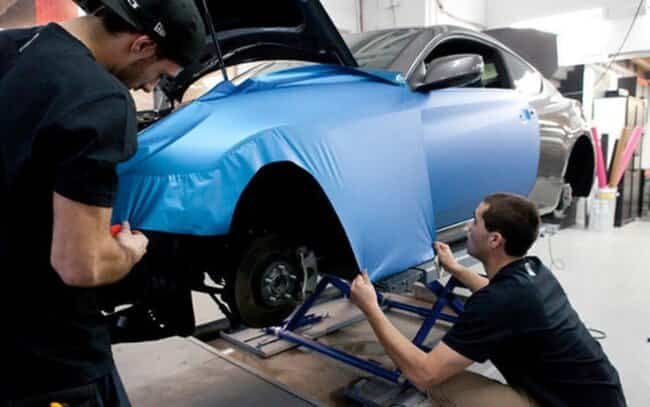
Quick Facts
| Type of wrap | RC update needed? | Note |
| Clear paint protection film | No | Never changes the registered colour |
| Same-colour wrap | No | Shade shouldn’t create a clear mismatch |
| Small decals and graphics | No | Partial graphics generally fine |
| Full wrap in a different colour | Yes | Get RTO approval and an endorsement |
| Matte, chrome or reflective wrap | Yes, if the colour differs | Same approval as any colour change |
| Two-tone accent, such as black roof | Ask the RTO | Enforcement loose, per one guide |
| Commercial advertising wrap | Check colour and local permissions | Municipal advertisement rules may apply |
The Short Answer
The question is whether your RC still describes your car.
- Acko says car wrapping is legal in India if it does not make your car’s RC details incorrect
- GoMechanic says a wrap that changes the colour recorded in your RC is treated like any other colour change and needs RTO approval and an RC update
- A wrap in the same colour, small decals or clear paint protection film do not
Why Section 52 Applies
The law cares about the registration record.
- Section 52 of the Motor Vehicles Act, 1988 prohibits alterations that change the particulars on your RC, and colour is one of them
- Acko notes that even if a wrap is removable, it’s not automatically exempt from Section 52 if the car’s visible colour has changed from the RC
- Carsuit says a colour change, by wrap or by paint, needs an RC endorsement from your RTO
- A one-word answer to “is wrapping illegal?” is “no,” but the full answer is longer, according to Tata AIG
Full Colour Change
The paperwork is routine.
- You apply at the RTO with ID proof, address proof, your insurance copy and the current RC, according to one guide
- The form is named differently across sources: Form 28 in one, Form 24 in another, and Carsuit says the form and naming vary by state
- A physical inspection follows, in which the officer notes the new colour on the RC
- One guide quotes an RTO colour-change fee of ₹300 to ₹1,000, which may differ by state
- If the car is financed, the financier is involved in the RC update, according to Aegis Films
Same-Colour and Partial Wraps
These are the easy cases, with one grey area.
- A same-colour wrap leaves the car matching its RC entry, provided the shade doesn’t create a clear mismatch, such as an RC that says white and a car that looks silver or grey
- A partial roof or bonnet wrap may not change the main body colour
- If the car visibly becomes two-colour, Acko says to ask the RTO whether the RC should mention both colours
- VahanBazaar says a full-panel accent wrap, like a black roof on a white car, technically requires a declaration, but enforcement is loose for small accents
Matte, Chrome and Reflective Finishes
Special finishes follow the same rule.
- Matte or chrome wraps aren’t banned, but need the same RTO approval as any colour change, according to one guide
- Reflective or chrome wraps make wrapping “legally sensitive,” and RTO approval is mandatory in those cases, according to Vinyled
- A matte black wrap over a white car needs the RC colour updated to black
Colour PPF
Coloured protective film is treated like a wrap.
- Aegis Films says no law bans colour PPF or colour vinyl
- Clear PPF never changes your registered colour, so no RC update is needed
- Colour PPF in the same shade, such as white on a white car, usually needs no update, while a different colour does
- What causes problems is a genuine mismatch between the visible colour and the RC
Colours to Avoid
One restriction stands out.
- GoMechanic says Army green isn’t allowed on private cars, as it’s reserved for the military
- I didn’t find a sourced list of other prohibited colours, so ask the RTO if you want something unusual
Advertising Wraps
Commercial branding adds another layer.
- A commercial advertising wrap on a private or business car depends on the visible colour and design, and local advertisement rules may apply, according to Acko
- Check colour endorsement, local municipal permissions, and that plates and glass stay visible
Fines and Insurance
Penalties and claims are the real cost of skipping it.
- Fines for a mismatch are quoted at ₹2,000 to ₹5,000+ by Vinyled and ₹5,000 for a first offence and ₹10,000 for later ones by VahanBazaar
- Insurers may reject claims if you don’t tell them about the change, so inform your insurer after a colour-changing wrap
- Clear PPF or a same-colour finish needs no policy change, according to Acko
Cost
Prices vary widely, so treat any figure cautiously.
- Full vinyl wraps are quoted at ₹15,000 to ₹40,000 by one guide, ₹60,000 to ₹1.5 lakh by another and ₹75,000 to ₹1.5 lakh by a third
- Repaints are quoted at ₹25,000 to ₹60,000 in one guide and ₹90,000 to ₹2 lakh in another
- Quality and car size drive the difference, and the RTO fee is small
FAQs
Q1. Is car wrapping legal in India?
A. Yes, but a wrap that changes your car’s visible colour needs RTO approval and an RC endorsement. Same-colour wraps and clear PPF don’t.
Q2. Do I need RTO approval for a vinyl wrap?
A. Only if the wrap changes the colour recorded in your RC. Godigit-style claims that no approval is ever needed conflict with most guides.
Q3. What is the fine for an unapproved colour change?
A. Guides quote ₹2,000 to ₹5,000 or more, and ₹5,000 for a first offence with ₹10,000 after, under Section 52.
Q4. Can I wrap my car in any colour?
A. Mostly, with an RC update, but Army green isn’t allowed on private cars, according to one guide.
Q5. Do I need to tell my insurer?
A. Yes, if the colour changes, or a claim may be rejected. Clear PPF or a same-colour finish needs no change.