 By Kartikey Bhatt
Dentistry is one of the most popular professional healthcare careers in India after medicine. Every year, thousands of NEET-UG aspirants compete for BDS seats with the goal of becoming dentists, pursuing MDS, joining hospitals or eventually establishing their own dental clinics. But in dentistry, choosing the right college matters greatly because students need much more than classroom knowledge. They need regular patient interaction, well-equipped laboratories, experienced faculty and extensive clinical practice.
A reputed dental college can provide exposure to different dental conditions and specialities, helping students develop confidence before entering professional practice. Government institutions can be attractive because of affordable fees and patient flow, while established private and deemed universities may provide modern infrastructure, research opportunities and advanced facilities.
For students planning BDS admission in 2026, the following are 10 leading dental institutions in India based primarily on the latest available national dental rankings and their established academic standing.
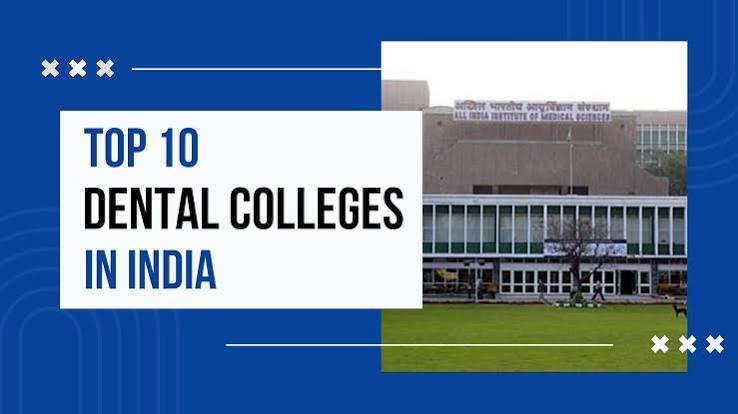
Top 10 Dental Colleges in India 2026
| Rank | Dental College/Institution | Location | Type |
|---|---|---|---|
| 1 | AIIMS New Delhi | New Delhi | Government |
| 2 | Saveetha Institute of Medical and Technical Sciences | Chennai | Deemed University |
| 3 | Maulana Azad Institute of Dental Sciences | New Delhi | Government |
| 4 | Dr. D. Y. Patil Vidyapeeth | Pune | Deemed University |
| 5 | Manipal College of Dental Sciences | Manipal | Private/Deemed University |
| 6 | A.B. Shetty Memorial Institute of Dental Sciences | Mangaluru | Private/Deemed University |
| 7 | King George’s Medical University | Lucknow | Government |
| 8 | SRM Dental College | Chennai | Private/Deemed University |
| 9 | Siksha ‘O’ Anusandhan | Bhubaneswar | Deemed University |
| 10 | JSS Dental College and Hospital | Mysuru | Private/Deemed University |
Note: The list uses the latest available national dental ranking as a reference point for students entering the 2026 admission cycle. Admission rules, course availability, seat matrices and fees should always be checked separately for the relevant institution.
1. AIIMS New Delhi
All India Institute of Medical Sciences (AIIMS), New Delhi holds the top position in the latest national dental ranking and provides an exceptional medical and dental academic environment.
One of its biggest advantages is multidisciplinary clinical exposure. Dental professionals frequently deal with patients who also have broader medical conditions, making access to a major medical institution extremely valuable.
Major strengths include:
- Excellent academic environment
- Advanced healthcare facilities
- Strong research culture
- Experienced faculty
- Large medical ecosystem
- Exposure to complex clinical cases
Students interested in dentistry should carefully check the specific undergraduate dental programme and current admission provisions applicable for 2026 rather than assuming every medical institution follows an identical BDS structure.
2. Saveetha Institute of Medical and Technical Sciences, Chennai
Saveetha Institute of Medical and Technical Sciences has established a strong position in Indian dental education and ranks among the country’s leading dental institutions.
Its dental ecosystem places substantial emphasis on clinical education, research and practical exposure.
Students can gain experience across important areas such as:
- Conservative dentistry
- Endodontics
- Orthodontics
- Prosthodontics
- Periodontics
- Oral surgery
- Paediatric dentistry
As a private/deemed institution, students should calculate the complete cost of the BDS programme, including tuition, hostel and other applicable expenses.
3. Maulana Azad Institute of Dental Sciences, New Delhi
Maulana Azad Institute of Dental Sciences (MAIDS) remains one of India’s most desirable government dental institutions.
Located in central Delhi, it benefits from a substantial public healthcare environment and strong patient exposure.
For BDS students, this is particularly important. Dentistry requires repeated supervised clinical practice, and access to a diverse patient population can improve practical learning considerably.
MAIDS is known for:
- Strong academic reputation
- Government education
- Excellent clinical exposure
- Experienced departments
- Postgraduate dental education
- Delhi-based healthcare environment
Competition for admission is naturally very high because of its reputation and comparatively affordable government fee structure.
4. Dr. D. Y. Patil Vidyapeeth, Pune
Dr. D. Y. Patil Vidyapeeth, Pune is a prominent deemed-to-be university with a significant presence in healthcare and dental education.
Its dental programmes provide students access to specialised departments and practical learning facilities.
Students may receive exposure to:
- General dentistry
- Oral and maxillofacial surgery
- Orthodontics
- Prosthodontics
- Endodontics
- Periodontology
- Dental research
Pune is also a major educational and healthcare city, creating a broader professional environment for students.
Since the cost can be substantially higher than at a government dental college, families should compare total fees before making an admission decision.
5. Manipal College of Dental Sciences, Manipal
Manipal College of Dental Sciences (MCODS), Manipal is one of India’s most established private dental institutions.
It operates within the large Manipal academic and healthcare ecosystem, giving students opportunities for multidisciplinary learning.
A major advantage of studying dentistry within a comprehensive health-sciences environment is interaction with other medical fields.
Key strengths include:
- Established dental education
- Clinical training
- Research opportunities
- Modern infrastructure
- Multidisciplinary exposure
- Large university environment
Students considering Manipal should compare programme fees, accommodation costs and scholarship opportunities before accepting a seat.
6. A.B. Shetty Memorial Institute of Dental Sciences, Mangaluru
A.B. Shetty Memorial Institute of Dental Sciences in Mangaluru is another highly regarded private dental institution.
The college is associated with a broader health-sciences university environment and provides education across major dental specialities.
Students can develop skills through theoretical education, laboratory work and supervised clinical practice.
Important areas of training include:
- Oral medicine
- Oral surgery
- Prosthodontics
- Orthodontics
- Periodontics
- Conservative dentistry
- Community dentistry
Mangaluru itself has a strong medical-education ecosystem, making it a familiar destination for healthcare students from different parts of India.
7. King George’s Medical University, Lucknow
King George’s Medical University (KGMU) is one of India’s prominent public medical universities, and its dental faculty benefits from a large teaching-hospital environment.
For dental students, access to a major medical institution can provide broader understanding of patient health and interdisciplinary treatment.
Why students consider KGMU:
- Government institution
- Strong clinical environment
- Medical and dental integration
- Established academic reputation
- Research opportunities
- Postgraduate education
Students looking for an affordable government option with substantial clinical exposure may keep KGMU high on their preference list, subject to NEET rank and counselling eligibility.
8. SRM Dental College, Chennai
SRM Dental College, Chennai is part of a large private higher-education and healthcare ecosystem.
The institution provides training in multiple branches of dentistry with access to clinical and laboratory infrastructure.
Students considering SRM should examine the actual clinical environment in addition to campus facilities.
In dental education, important considerations include:
- Number and variety of patients
- Clinical equipment
- Faculty supervision
- Laboratory facilities
- Internship exposure
- Opportunities across dental specialities
Private dental education can involve a significant financial commitment, so students should compare costs with realistic career plans.
9. Siksha ‘O’ Anusandhan, Bhubaneswar
Siksha ‘O’ Anusandhan (SOA) in Bhubaneswar has emerged as a prominent multidisciplinary institution with a strong presence in healthcare education.
Its dental education environment offers students opportunities to combine academics with clinical practice and research.
Studying within a multidisciplinary university can also provide exposure to medicine and other health sciences.
Students should evaluate:
- Patient flow
- Clinical facilities
- Faculty
- Research opportunities
- Internship experience
- Total course fees
Students from eastern India may find Bhubaneswar particularly convenient because of its connectivity and growing healthcare ecosystem.
10. JSS Dental College and Hospital, Mysuru
JSS Dental College and Hospital, Mysuru completes the top 10 and has an established reputation in dental education.
The institution provides education and clinical training across multiple dental specialities.
Its hospital-based environment can help students gain the patient interaction required to build clinical skills.
Mysuru can also appeal to students looking for an educational city with a relatively calmer environment than larger metropolitan centres.
Before admission, compare the latest fee structure, hostel arrangements, clinical exposure and course requirements.
How to Get Admission to BDS in 2026
For students seeking BDS admission in India, NEET-UG is the key entrance examination under the applicable national admission framework.
A good Class 12 score alone cannot replace the required NEET route for BDS admission.
The general process includes:
- Complete Class 12 with the required subjects and eligibility
- Register for NEET-UG 2026
- Appear for NEET
- Meet the applicable qualifying requirements
- Register for the relevant counselling
- Fill college preferences
- Participate in seat allotment
- Complete document verification
- Pay the required fee and report to the allotted college
Depending on the institution, seats may be handled through central, state, deemed-university or other applicable counselling categories.
Government vs Private Dental College
This is one of the biggest decisions BDS aspirants face.
Government colleges generally offer a major advantage in terms of lower fees and can have substantial patient flow. However, government seats are highly competitive.
Established private and deemed dental institutions can offer excellent infrastructure and clinical facilities, but the total cost may be considerably higher.
Compare:
- Total BDS fees
- Patient inflow
- Clinical infrastructure
- Faculty
- Dental equipment
- Hostel expenses
- Internship exposure
- Postgraduate departments
- Research facilities
Do not choose a private dental college simply because the campus looks premium.
Why Patient Exposure Matters in Dental College
Dentistry is a practical profession.
Students need to develop skills in examining patients, diagnosing oral conditions, treatment planning and performing procedures under appropriate supervision.
Good patient exposure can help students become familiar with a wide variety of cases.
Therefore, before selecting a college, investigate the strength of departments such as:
- Oral medicine and radiology
- Oral and maxillofacial surgery
- Conservative dentistry and endodontics
- Prosthodontics
- Orthodontics
- Periodontology
- Paediatric dentistry
- Public-health dentistry
For BDS students, clinical exposure can be more valuable than luxurious campus infrastructure.
Career Options After BDS
BDS graduates have several options depending on their interests and long-term plans.
They may pursue:
- Private dental practice
- Employment in dental clinics
- Hospital dentistry
- MDS
- Government healthcare opportunities
- Public-health dentistry
- Academics and research
- Healthcare administration
- Dental entrepreneurship
Students planning their own clinic should remember that building a successful dental practice usually requires clinical experience, investment, patient trust and strong professional skills.
FAQs
Q1. Which is the No. 1 dental college in India in 2026?
A. Based on the latest available national dental ranking used ahead of the 2026 admission cycle, AIIMS New Delhi holds the top position in the Dental category. Students should separately verify the specific undergraduate dental programme and admission pathway they intend to pursue.
Q2. Which are the best government dental colleges in India?
A. Prominent public options include AIIMS New Delhi, Maulana Azad Institute of Dental Sciences and King George’s Medical University, along with several established government dental colleges across different states. Admission depends heavily on NEET rank and counselling rules.
Q3. Is a private dental college worth the high BDS fees?
A. It can be if the institution provides strong clinical exposure, recognised training, good faculty and suitable facilities, and the cost is financially manageable for your family. Compare the entire course expense with government and lower-cost alternatives before taking a large education loan.
Q4. Should I choose a lower-ranked college with more patients?
A. Patient exposure should be given substantial importance because dentistry is a clinical profession. Rankings are useful for shortlisting, but students should also compare patient flow, faculty supervision, clinical departments, equipment and practical opportunities before finalising a BDS college.