 By Akash Sharma
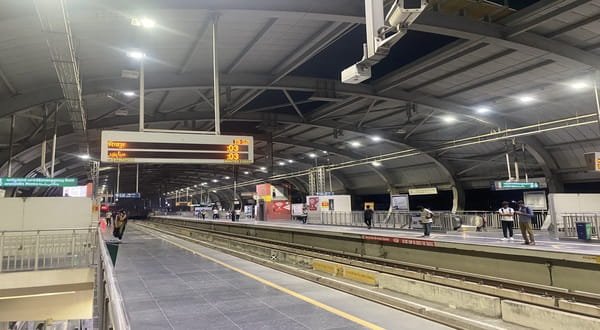
 JNTU College Metro Station, commonly referred to as JNTU Metro Station, is a prominent elevated station on the Red Line of the Hyderabad Metro Rail. It serves as a vital transit hub in the Kukatpally and Nizampet region of Hyderabad, Telangana. Named after the prestigious Jawaharlal Nehru Technological University (JNTU), the station was opened to the public on November 29, 2017, as part of the first phase of the Hyderabad Metro. It has since become an essential lifeline for students, IT professionals, residents, and daily commuters traveling across the city. Its strategic location near major educational institutions, residential colonies, and commercial areas makes it one of the busiest stations on the Red Line corridor.
Location
JNTU College Metro Station is located near JNTU College in Kukatpally, Hyderabad, Telangana, with the pincode 500072 (and nearby areas extending to 500085). Its geographic coordinates are approximately 17.498653°N, 78.388793°E. The station stands along National Highway 65 (NH 65) in the Dharma Reddy Colony Phase II area, close to Nizampet X Roads.
The surrounding locality is a dynamic mix of educational campuses, residential housing boards, IT hubs, and commercial developments. Key landmarks include Jawaharlal Nehru Technological University Hyderabad (JNTUH), Asian GPR Multiplex, Nizampet Road, and various housing societies in Kukatpally Housing Board Colony. The elevated structure of the station offers clear views of the bustling urban landscape, with wide roads, high-rise apartments, and heavy vehicular movement below. Its position in the northwestern part of Hyderabad places it conveniently between Miyapur and KPHB Colony, serving as a gateway to the western suburbs while connecting seamlessly to central Hyderabad.
Connectivity
JNTU College Metro Station provides excellent multi-modal connectivity, making it a preferred choice for commuters in northwest Hyderabad. As part of the Red Line, it links passengers to major parts of the city, from Miyapur in the west to LB Nagar in the east. Commuters can reach key destinations such as Ameerpet (for interchange with the Blue Line), Nampally, MG Bus Station, and further extensions.
Last-mile connectivity is robust with auto-rickshaws, e-rickshaws, taxis (including Uber and Ola), and TSRTC buses operating from designated points near the exits. The station’s proximity to Nizampet X Roads and NH 65 ensures smooth road access to areas like Pragathi Nagar, Bachupally, Kondapur, and HITEC City. For students of JNTU and nearby colleges, the station significantly reduces travel time to campuses and hostels.
Interchange opportunities at Ameerpet allow seamless transfers to the Blue Line for journeys toward Raidurg or other corridors. The station also supports connectivity to Rajiv Gandhi International Airport via interchanges and feeder services. Its role in serving the IT and educational belt has boosted residential and commercial growth in the Kukatpally-Nizampet corridor.
Route and Operations
JNTU College Metro Station operates on the Red Line (Corridor I) with two side platforms in an elevated configuration:
- Platform 1: Eastbound trains towards LB Nagar (Vasavi LB Nagar). Next station: KPHB Colony.
- Platform 2: Westbound trains towards Miyapur. Next station: Miyapur.
The Red Line spans approximately 29 km with 27 stations, offering extensive east-west connectivity across Hyderabad. Trains operate at frequent intervals of 4-8 minutes during peak hours and slightly longer during off-peak times. The first trains generally start around 6:00-6:02 AM, while the last services run until approximately 11:30 PM to 12:30 AM.
A typical journey from JNTU College to Miyapur takes about 5-10 minutes, while a full end-to-end trip to LB Nagar may take 45-60 minutes. Fares are distance-based, ranging from ₹12 to ₹76 depending on the destination. Smart cards, tokens, and contactless payments are supported. Automated announcements in Telugu, Hindi, and English, along with digital display boards and clear signage, assist passengers in navigating efficiently. The station handles significant footfall due to its proximity to JNTU and residential clusters, with peak hours seeing heavy student and office commuter traffic.
Gates and Exits
JNTU College Metro Station features four entry/exit gates (Gates A, B, C, and D), strategically placed to serve different sides of the busy locality:
- Gate A and Gate B: Primarily serve areas towards JNTU College, university hostels, and academic blocks. These gates are heavily used by students and faculty.
- Gate C: Leads towards Nizampet X Roads, Asian GPR Multiplex, and nearby commercial establishments. Popular among shoppers and residents heading to local markets.
- Gate D: Opens towards Dharma Reddy Colony, Kukatpally Housing Board areas, and additional residential pockets.
All gates are equipped with staircases, escalators, and elevators, ensuring smooth vertical movement from street level to the elevated concourse and platforms. The station is fully Divyang-friendly, with ramps, tactile paving, priority lifts, dedicated seating, and assistance for differently-abled passengers. Clear signage and security personnel help manage crowds, particularly during university hours. Drop-off and pick-up zones near the gates are well-organized to handle the heavy traffic flow along NH 65.
Facilities
JNTU College Metro Station is equipped with modern amenities designed for high passenger comfort and convenience:
Ticketing and Information: Ticket counters, Automated Ticket Vending Machines (ATVMs), smart card recharge kiosks, and customer care desks operate efficiently on the concourse level. Real-time train information and route maps are prominently displayed.
Parking: Paid parking facilities are available for two-wheelers, making it convenient for daily commuters and students. Limited four-wheeler parking may also be accessible nearby.
Banking and Retail: ATMs are installed for quick cash withdrawals. Small retail kiosks sell snacks, beverages, newspapers, magazines, and essential items. The proximity to malls and local markets supplements shopping and dining needs.
Accessibility and Comfort: Escalators, elevators, clean Sulabh toilets, drinking water fountains, and adequate seating enhance the passenger experience. The station features proper lighting, ventilation, and air-conditioned areas where applicable. Announcements in multiple languages cater to diverse users, including non-local commuters.
Safety and Security: Round-the-clock CCTV surveillance, fire safety systems, trained security staff, and emergency protocols ensure a secure environment. Lost-and-found counters and first-aid facilities are available. The elevated design allows natural light and air circulation, contributing to a pleasant commuting atmosphere.
Additional conveniences include mobile charging points and well-maintained surroundings. The station’s proximity to educational institutions and commercial areas adds to its practical value for daily users.
Significance and Future Outlook
JNTU College Metro Station has transformed mobility in northwest Hyderabad. By providing reliable, affordable, and fast connectivity, it has reduced road congestion on NH 65, supported educational access for thousands of students at JNTU and nearby colleges, and boosted real estate development in Kukatpally, Nizampet, and surrounding areas. It serves a diverse mix of students, IT professionals, families, and traders, playing a key role in the region’s economic and urban growth.
As Hyderabad continues to expand, the station’s importance is set to grow further with potential network extensions, better last-mile integration, and increased services. Challenges such as peak-hour crowding and parking demand are managed through ongoing improvements and efficient operations by Hyderabad Metro Rail Limited (HMRL) and L&T Metro.
In conclusion, JNTU College Metro Station stands as a dynamic urban transit hub that blends strategic location, strong Red Line connectivity, efficient operations, multiple accessible gates, and modern facilities. Whether you are a student heading to JNTU, a professional commuting to the city center, or a resident exploring Hyderabad, the station offers reliability, convenience, and comfort. It exemplifies the transformative impact of metro rail on a rapidly growing metropolis like Hyderabad, connecting people, opportunities, and aspirations across the city.