 By Kartikey Bhatt
Cleaning a toilet often becomes difficult not because of the visible bowl, but because of the areas you cannot easily reach. In a conventional toilet, the upper edge of the bowl usually has a rim or channel from which flushing water enters. Dirt, mineral deposits and cleaning residue can collect underneath this area, making it one of the most inconvenient parts of the toilet to maintain.
Rimless toilets are designed to address this problem. Instead of relying on a traditional enclosed rim around the inside of the bowl, they use a more open bowl design with strategically directed water outlets. This makes more of the interior surface visible and accessible during cleaning.
For Indian households, where bathrooms may experience heavy family use and water can contain significant mineral content, easier cleaning can be a meaningful advantage. However, “rimless” does not automatically mean maintenance-free or better in every situation. Flush engineering, installation, water conditions and manufacturing quality still matter.
Understanding how rimless toilets work can help you decide whether the additional feature is worthwhile for your bathroom.
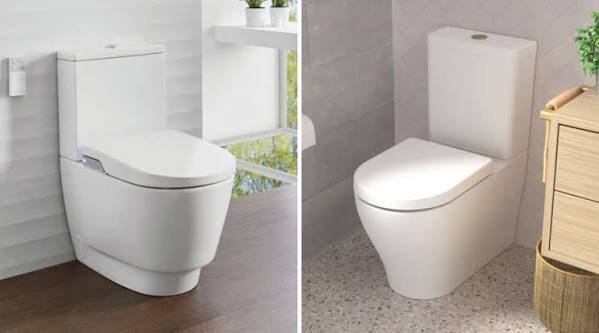
Rimless Toilets: Quick Overview
| Factor | Rimless Toilet |
|---|---|
| Bowl Design | Little or no traditional enclosed flushing rim |
| Flushing | Water directed around bowl through designed outlets |
| Cleaning | Generally easier around upper bowl |
| Hidden Areas | Fewer difficult-to-reach rim cavities |
| Hygiene | Easier access can support better cleaning |
| Water Efficiency | Depends on specific flushing system |
| Appearance | Modern and streamlined |
| Hard-Water Maintenance | Scale can still develop |
| Splash Control | Depends on bowl and flush design |
| Installation | Similar in principle to other toilets, model-dependent |
| Cost | Often positioned above basic conventional models |
| Best For | Homes prioritising easy cleaning and modern design |
What Exactly Is a Rimless Toilet?
A conventional toilet typically directs flushing water through channels or openings located beneath the bowl’s upper rim.
This helps distribute water around the bowl, but the enclosed underside can be difficult to see and clean.
A rimless toilet changes this arrangement.
The bowl is designed without the same traditional enclosed rim. Water is instead guided around the bowl through specifically positioned outlets or channels.
Different manufacturers use different designs, but the objective is broadly similar: distribute flushing water effectively while reducing inaccessible areas.
This creates a more open interior that is easier to inspect and wipe.
Why Does Removing the Rim Matter?
The underside of a conventional toilet rim can be awkward to reach.
Over time, it may collect:
- Mineral deposits
- Dirt
- Cleaning-product residue
- Organic matter
- Discolouration
Because the area is partially hidden, homeowners may not notice buildup until it becomes significant.
A rimless design exposes more of the bowl surface.
This does not magically keep the toilet clean, but it makes routine cleaning more straightforward.
The distinction is important.
Rimless means easier access for cleaning—not a self-cleaning toilet.
Rimless Toilets Can Be Easier to Clean
Cleaning convenience is probably the strongest reason to consider a rimless model.
Without a deep enclosed rim, a cleaning brush or cloth can reach more of the bowl.
This can reduce the need to repeatedly scrub underneath difficult edges.
For a busy Indian household, this can make regular bathroom maintenance less frustrating.
Practical advantages may include:
- Better visibility of the bowl surface
- Fewer inaccessible rim areas
- Easier wiping
- Easier inspection for mineral buildup
- Less complicated routine cleaning
However, areas around the water outlets and other bowl features still require attention.
Does Rimless Mean More Hygienic?
Rimless toilets are frequently marketed around hygiene.
There is a reasonable practical basis for this: surfaces that are easier to access can be cleaned more thoroughly.
A conventional hidden rim may provide areas where residue is difficult to remove.
Eliminating or reducing those enclosed areas simplifies cleaning.
But homeowners should avoid interpreting “rimless” as meaning that bacteria cannot exist on the toilet.
Hygiene still depends on:
- Cleaning frequency
- Cleaning method
- User habits
- Bathroom ventilation
- Water quality
- Overall toilet design
A dirty rimless toilet is still a dirty toilet.
Its advantage is that keeping important bowl surfaces clean can be easier.
How Does a Rimless Toilet Flush?
Instead of releasing water from numerous openings underneath a traditional rim, many rimless toilets use strategically positioned outlets.
These outlets direct water around the bowl.
The shape of the bowl helps guide the flow so that water reaches a broad area of the internal surface before exiting through the trap.
Some designs create a strong circulating or directional flushing action.
The exact method differs between manufacturers.
For this reason, two toilets labelled “rimless” may perform differently.
The effectiveness depends on the complete engineering of the:
- Bowl
- Water outlets
- Cistern
- Flush valve
- Trapway
The word “rimless” alone should not be treated as proof of excellent flushing.
Does a Rimless Toilet Flush Better?
Not necessarily.
Rimless describes the bowl and water-distribution design, not an automatic level of flushing performance.
A well-engineered rimless toilet can provide excellent bowl coverage.
But a well-designed conventional toilet can also flush effectively.
When comparing models, consider:
- Bowl coverage
- Waste-removal performance
- Flush volume
- Trapway design
- Water pressure or cistern requirements
- Manufacturer specifications
If possible, choose a model from a manufacturer with established service support and easily available internal parts.
Can Rimless Toilets Save Water?
Some rimless toilets are designed to achieve effective bowl washing with controlled quantities of water.
Many are also paired with dual-flush cisterns.
A dual-flush system provides separate flushing options, commonly allowing a lower-volume flush for liquid waste and a higher-volume flush when necessary.
This can reduce unnecessary water consumption when the toilet is designed and used correctly.
However, rimless does not automatically equal water-saving.
Water consumption depends on the actual flushing system.
Always check the manufacturer’s specified flush volumes rather than assuming efficiency from the rimless label.
Hard Water Still Affects Rimless Toilets
Hard water is common across many parts of India.
A rimless toilet does not remove calcium, magnesium or other dissolved minerals from the water supply.
Mineral deposits can therefore still form around:
- Water outlets
- Bowl surfaces
- Cistern components
- Flush mechanisms
The advantage is that deposits on exposed bowl surfaces may be easier to notice and reach.
Regular cleaning is preferable to allowing thick scale to develop.
If the water outlets become restricted by mineral buildup, flushing performance can eventually be affected.
Follow manufacturer-approved cleaning instructions rather than using extremely aggressive chemicals that could damage components or surfaces.
Rimless Toilets Can Reduce Hidden Cleaning Areas
One of the most practical differences becomes obvious when cleaning by hand.
With a traditional rim, you may need a specially shaped brush or cleaner to reach underneath the edge.
With a rimless bowl, much of this hidden geometry is removed.
This can be useful for:
- Family bathrooms
- Guest bathrooms
- Hotels
- Offices
- High-use washrooms
Where frequent cleaning is required, reducing inaccessible surfaces can save effort.
The advantage is not just about appearance. Easier inspection allows cleaning staff or homeowners to see where attention is needed.
What About Splashing During the Flush?
Because rimless toilets direct water around an open bowl, some buyers worry that water will splash outside.
A properly designed toilet should control water within the bowl during normal flushing.
Manufacturers achieve this through the shape and positioning of outlets and the geometry of the bowl.
However, performance varies between products.
Poorly engineered flushing, unsuitable components or incorrect installation can potentially create excessive turbulence.
Choose a model based on overall design quality rather than buying the cheapest product simply because it carries a “rimless” label.
Rimless Toilets Can Look More Modern
Rimless models are commonly associated with contemporary bathrooms.
The open bowl design complements other modern sanitaryware trends such as:
- Wall-hung toilets
- Concealed cisterns
- One-piece toilets
- Floating vanities
- Minimalist fittings
- Large-format bathroom tiles
However, rimless technology is not limited to one external toilet style.
Depending on the manufacturer, it may be available in wall-hung, floor-mounted and other configurations.
You can therefore choose the installation style separately from the rim design.
Installation Compatibility Still Comes First
Do not buy a rimless toilet before checking your bathroom plumbing.
The toilet still needs to match:
- Waste outlet location
- Outlet type
- Rough-in dimensions
- Cistern arrangement
- Water inlet
- Available bathroom space
For wall-hung models, additional consideration is required for the concealed cistern and support frame.
Replacing an existing toilet with a rimless model is often possible, but compatibility should be confirmed before purchase.
Changing the waste outlet after flooring and waterproofing are complete can make a simple replacement far more complicated.
Maintenance Is More Than Cleaning the Bowl
While rimless toilets simplify bowl cleaning, other components still require normal maintenance.
These can include:
- Inlet valve
- Flush valve
- Dual-flush mechanism
- Toilet seat
- Hinges
- Seals
- Cistern components
Before buying, check whether replacement parts are easily available in your city.
A premium toilet becomes inconvenient if a small proprietary component fails and cannot be sourced.
For long-term ownership, after-sales support can be as important as the initial design.
What Should You Check Before Buying?
Do not choose a toilet based only on the word “rimless.”
Consider the complete product.
Important factors include:
- Bathroom dimensions
- Floor- or wall-outlet compatibility
- Flush performance
- Water consumption
- Bowl shape
- Ease of cleaning
- Seat quality
- Spare-part availability
- Warranty
- Service support
- Installation requirements
For a small bathroom, also check how far the toilet projects from the wall. External dimensions may matter more to everyday comfort than the rim design.
Is a Rimless Toilet Worth It for Indian Homes?
A rimless toilet can be a worthwhile upgrade when easy cleaning and bathroom hygiene are major priorities.
It is particularly attractive for households that dislike cleaning underneath a conventional toilet rim.
Its main practical advantages are:
- Fewer difficult-to-reach bowl areas
- Easier routine cleaning
- Better visibility of dirt and scale
- Modern design
- Availability with efficient flushing systems on many models
But it should not be purchased based on marketing terminology alone.
A good rimless toilet still needs effective flush engineering, suitable plumbing compatibility and readily available spare parts.
For most homeowners, a well-designed rimless model from a reliable manufacturer can offer a noticeable improvement in cleaning convenience without fundamentally changing how the bathroom is used.
FAQs
Q1. Is a rimless toilet really more hygienic than a normal toilet?
A. It can be easier to keep hygienic because there are fewer hidden areas beneath the bowl rim where residue can accumulate. However, it still requires regular cleaning and proper bathroom hygiene.
Q2. Does a rimless toilet use less water?
A. Not automatically. Water consumption depends on the specific flushing system and flush volume. Many rimless models include efficient dual-flush systems, but you should check the actual product specifications.
Q3. Is a rimless toilet suitable for hard-water areas in India?
A. Yes, but hard-water scale can still develop around water outlets and other components. The open design can make deposits easier to see and clean, but regular maintenance remains necessary.
Q4. Can I replace my existing toilet with a rimless model?
A. Usually, provided the new toilet matches your existing waste outlet, rough-in, water connection and available space. Have the plumbing dimensions checked before purchasing to avoid costly alterations.