 By Saurav
The top cars in India for hilly areas combine plenty of low-end torque for steep climbs, good ground clearance for broken mountain roads, strong brakes and engine braking for long descents, and, where the roads get truly rough, a four-wheel-drive system with a low-range gearbox. That points first to the Mahindra Thar and Thar Roxx, Maruti Suzuki Jimny, Mahindra Scorpio-N, Toyota Fortuner, and Force Gurkha for serious terrain, to the Maruti Grand Vitara and Toyota Hyryder with all-wheel drive for road-oriented hill trips, and to torquey diesels like the Tata Nexon, Hyundai Creta, and Toyota Innova Crysta for everyday ghat roads. The right choice depends on how rough your roads really are: most hill-station highways need a good, well-maintained two-wheel-drive car, while high-altitude tracks, snow, and mud reward a proper 4×4. Prices and specifications below are approximate figures from recent listings and vary by variant and city, so confirm details with a dealer.
What Hill Driving Demands From a Car
- Low-end torque: steep gradients and hairpin bends need strong pull at low revs, which is why diesels and turbo-petrols shine.
- Altitude performance: naturally aspirated petrol engines lose noticeable power as the air thins, while turbocharged and diesel engines cope better.
- Braking and engine braking: long descents can overheat brakes, so a car that holds a low gear and offers hill-descent control is a big help.
- Ground clearance: broken edges, rocks, and landslide debris call for around 190 mm or more.
- Traction: 4×4 or AWD helps on wet, muddy, gravelly, or snowy surfaces, and low-range gearing helps on steep, loose climbs.
- Hill-start assist: prevents rolling back on slopes.
- Size and turning circle: narrow roads reward compact, manoeuvrable vehicles.
- Cooling system and robust suspension: endure repeated climbs and rough surfaces.
- Fuel range: petrol pumps can be far apart in remote regions.
- Tyres: good-quality, appropriately rated tyres matter more than almost any spec.
4×4, AWD, or 2WD?
- 4×4 with low range: best for hardcore off-roading, mountains, mud, sand, and snow, with the lowest fuel efficiency.
- AWD: helps in rain and on slippery roads and light off-road use, with better efficiency than a 4×4.
- 2WD: perfectly adequate for most paved hill-station roads, with the best efficiency and lowest cost.
The Ten Cars
Mahindra Thar (4×4; about 226 mm clearance; from about ₹11.5 lakh)
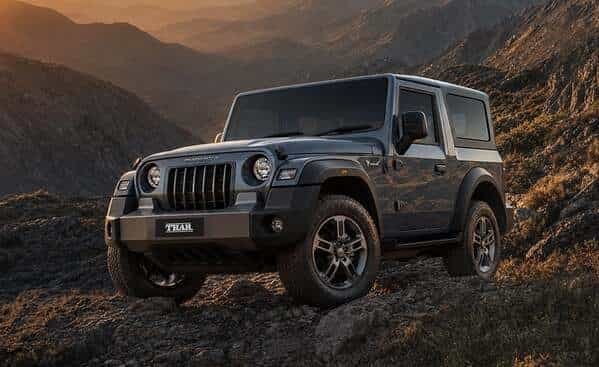
- Why it leads: a proper 4×4 with a low-range transfer case, a torquey diesel option, good ground clearance, and a tough, simple build that suits rugged tracks like those of Spiti and Uttarakhand.
- Best for: adventurous buyers who want real capability.
- Keep in mind: a firm ride and modest rear space in the three-door.
Mahindra Thar Roxx (4×4 diesel; about 226 mm; from about ₹12.4 lakh)
- Why it stands out: the five-door Thar with more rear space, a better ride, and a plusher cabin, with 4×4 and low range on diesel variants, and a 5-star crash-test rating reported.
- Best for: families who want Thar capability with more comfort and luggage space.
Maruti Suzuki Jimny (4×4; about 210 mm; from about ₹12.8 lakh)
- Why it stands out: a compact, lightweight 4×4 with AllGrip Pro, a low-range transfer case, hill-hold and hill-descent control, excellent agility on narrow trails, and a claimed 16.4 km/l.
- Best for: couples and small groups who want a nimble, efficient 4×4.
- Keep in mind: a small boot and a firm ride.
Mahindra Scorpio-N 4×4 (diesel; about 190 mm; from about ₹14 lakh)
- Why it stands out: a body-on-frame SUV with selectable 4WD and a low-range gearbox, hill-descent and hill-hold control, terrain modes for snow, mud, and sand, and a strong 2.2-litre diesel with up to about 400 Nm.
- Best for: families who want capability plus room for six or seven.
- Keep in mind: it’s bulky on narrow roads.
Toyota Fortuner 4×4 (about 225 mm; from about ₹33 lakh)
- Why it stands out: a strong 2.8-litre diesel with around 420 to 500 Nm, a 4×4 system with low range and traction control, a comfortable cabin, and a reputation for reliability on long mountain trips.
- Best for: buyers who want dependable, comfortable hill touring.
- Keep in mind: a high price and large size.
Force Gurkha (4×4; about 233 mm; from about ₹16.3 lakh)
- Why it stands out: the most rugged option here, with front and rear differential locks, a snorkel, a 2.6-litre diesel, and the highest ground clearance of any mainstream Indian SUV.
- Best for: serious expedition drivers.
- Keep in mind: basic comfort and features.
Maruti Suzuki Grand Vitara AWD and Toyota Urban Cruiser Hyryder AWD (about 210 mm; from about ₹10.8 lakh for the range)
- Why they stand out: mid-size SUVs with an all-wheel-drive option, high ground clearance, comfortable cabins, and a smooth, efficient petrol engine, suited to wet and slippery hill roads.
- Best for: families who want road-oriented hill trips with extra traction and good mileage.
- Keep in mind: AWD is for slippery surfaces, not hard off-roading.
Tata Nexon diesel (about 208 mm; from about ₹7.3 lakh for the range)
- Why it stands out: a budget-friendly compact SUV with high clearance, a torquey diesel option, a 5-star safety rating, and an easy-to-manage size for narrow roads.
- Best for: buyers who want a safe, affordable hill-station car.
Hyundai Creta diesel or turbo-petrol (about 190 mm; from about ₹10.7 lakh)
- Why it stands out: a refined mid-size SUV with strong low-end torque from its diesel, a comfortable ride, and a 5-star rating reported.
- Best for: small families who want an all-rounder for city and ghat roads.
- Keep in mind: two-wheel drive only, so not for rough or snowy tracks.
Toyota Innova Crysta diesel (from about ₹19.7 lakh)
- Why it stands out: a torquey diesel with a smooth, stable, comfortable ride, strong brakes, and a legendary reputation for dependability, with seven- and eight-seat layouts for large families.
- Best for: families who tackle long ghat roads on paved routes.
- Keep in mind: rear-wheel drive and modest ground clearance mean it’s best on maintained roads.
Also Worth Considering
- Tata Harrier and Safari (diesel): strong torque and hill-descent aids, with front-wheel drive.
- Mahindra XUV 7XO and XUV700: powerful diesels, with AWD on some versions.
- Kia Sonet and Maruti Brezza: compact SUVs with good clearance for lighter hill use.
- Mahindra Bolero Neo and Bolero: simple, rugged options for rough roads.
- Toyota Hilux and Isuzu V-Cross: tough pickups with 4×4 for demanding terrain.
- Jeep Compass and other AWD SUVs: balanced options for higher budgets.
Matching the Car to Your Hill Plans
Paved hill-station highways (Shimla, Munnar, Ooty, Darjeeling): a good 2WD car such as the Creta, Nexon, or Crysta is plenty, provided the brakes and tyres are in good shape.
Rougher mountain roads with mud, gravel, and landslide patches: choose a vehicle with at least 200 mm clearance and ideally 4×4, such as the Thar, Jimny, or Scorpio-N.
High-altitude routes (Ladakh, Spiti, Sikkim): a 4×4 diesel or turbo with good low-end torque handles thin air better, and plan for acclimatisation and fuel.
Snowy or icy roads: 4×4 or AWD with proper winter tyres or chains helps, though careful driving matters most.
Family trips with luggage: consider the Fortuner, Scorpio-N, Safari, or Crysta for space and torque.
Tight budgets: the Nexon diesel or Creta provide capability and safety at moderate prices.
Preparing Your Car for the Hills
- Service the car beforehand, checking brakes, coolant, engine oil, transmission fluid, and the clutch if it’s a manual.
- Inspect tyres, including tread, pressure, and the spare, and carry a puncture kit.
- Check the brakes thoroughly, since descents are demanding.
- Make sure the cooling system and battery are healthy.
- Top up fuel at every opportunity in remote areas.
- Carry essentials: a torch, first-aid kit, tow rope, warning triangle, jumper cables, and warm clothing.
- Check the weather and road conditions, including landslide and closure alerts, before you start.
- Don’t overload the vehicle.
Safe Hill Driving Habits
- Use a lower gear on descents to let engine braking do the work, and avoid riding the brakes.
- Use hill-descent control if your car has it.
- Give way to uphill traffic, as is the convention on narrow hill roads.
- Sound the horn on blind curves where appropriate.
- Keep a steady speed and don’t overtake on bends.
- Stay in your lane, and keep away from the edge.
- Take breaks, and don’t drive when tired, especially at night.
- Watch for animals, falling rocks, and wet patches.
- Don’t tailgate, and leave extra space on slippery surfaces.
- Keep your headlights on in fog and low visibility.
Frequently Asked Questions
Q1. Which car is best for hilly areas in India?
A. The Mahindra Thar, Thar Roxx, Maruti Suzuki Jimny, Mahindra Scorpio-N, and Toyota Fortuner are strong choices for rough or challenging hill terrain. For mostly paved mountain roads, SUVs such as the Tata Nexon or Hyundai Creta can also be practical options.
Q2. Do I need a 4×4 for hill stations?
A. Usually not. A 4×4 is generally unnecessary for well-paved hill roads, but it can provide additional traction on mud, gravel, snow, steep loose surfaces, and difficult off-road tracks.
Q3. Is diesel better than petrol for hills?
A. Diesel engines can work particularly well in hilly areas because their strong low-end torque makes climbing steep roads easier. Modern turbo-petrol engines can also perform well, while naturally aspirated petrol engines may experience a more noticeable reduction in performance at high altitudes.
Q4. Do automatic cars work well in the hills?
A. Yes. Automatic cars can work well on hill roads, particularly torque-converter automatics with manual or low-gear modes that allow the driver to hold a lower gear on descents. Manual transmissions also provide direct control over gear selection and engine braking.
Q5. How can I protect my brakes on long descents?
A. Use a lower gear and engine braking to help control the vehicle’s speed instead of relying continuously on the brakes. If the vehicle has hill-descent control, use it where appropriate. Avoid riding the brakes continuously, as prolonged braking can cause excessive heat and reduce braking effectiveness.