 By Akash Sharma
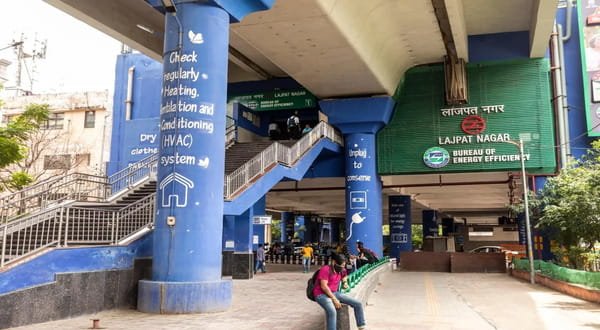
 Lajpat Nagar Metro Station is a prominent interchange hub in South Delhi, connecting the Violet Line and Pink Line of the Delhi Metro network. Serving one of the city’s most vibrant commercial and residential areas, it caters to thousands of daily commuters, shoppers, and visitors. The station combines an elevated structure for the Violet Line with an underground section for the Pink Line, making it a key node for seamless travel across Delhi. Opened on the Violet Line on October 3, 2010 (in time for the Commonwealth Games), and later integrated with the Pink Line in 2018, it has become indispensable for mobility in densely populated South Delhi.
Location
Lajpat Nagar Metro Station is situated along Lala Lajpat Rai Marg in Lajpat Nagar, New Delhi, with the postal code 110024. Its geographic coordinates are approximately 28.5706°N, 77.2365°E. The station lies in a bustling mixed-use zone known for its vibrant markets, residential colonies, and commercial activity.
The surrounding area includes the famous Lajpat Nagar Central Market, a shopper’s paradise for garments, electronics, home décor, and street food. Nearby landmarks comprise Defence Colony, Amar Colony, Block 1-4 of Lajpat Nagar, and Moolchand Flyover. The locality is well-connected by major roads like Ring Road and Outer Ring Road, placing it conveniently between Central Delhi and southern suburbs. The elevated Violet Line platforms offer views of the dense urban fabric, bustling streets, and market alleys, while the underground Pink Line adds modern depth to the infrastructure. This central position makes the station a natural hub for both locals and outsiders exploring South Delhi’s commercial and cultural offerings.
Connectivity
As a major interchange station, Lajpat Nagar provides excellent multi-modal connectivity across Delhi. The Violet Line links it northward to Kashmere Gate and southward to Raja Nahar Singh (Ballabhgarh), while the Pink Line offers a circular route connecting Majlis Park in the north to Shiv Vihar in the east. This dual connectivity allows easy access to key areas such as Connaught Place, Chandni Chowk, Nehru Place, Kalkaji, and further extensions toward Noida or Faridabad.
Last-mile connectivity is robust with auto-rickshaws, e-rickshaws, taxis (including Uber and Ola), and cycle rickshaws readily available near the gates. Although dedicated feeder bus services are limited, nearby DTC bus stops on Lala Lajpat Rai Marg and Ring Road provide additional options. The station supports seamless interchange without exiting the paid area, significantly reducing transfer times.
Road connectivity benefits from proximity to major arteries, enabling quick private vehicle access to airports, railway stations, or other parts of the NCR. For airport-bound passengers, interchanges at stations like Dhaula Kuan or New Delhi Railway Station facilitate smooth journeys. The station serves a diverse user base — market traders, office-goers, students, and families — boosting the economic vibrancy of Lajpat Nagar and surrounding colonies.
Route and Operations
Lajpat Nagar Metro Station features four platforms across two levels:
Violet Line (Elevated, Line 6):
- Platform 1: Towards Raja Nahar Singh (Ballabhgarh) – Next station: Moolchand
- Platform 2: Towards Kashmere Gate – Next station: Jangpura
Pink Line (Underground, Line 7):
- Platform 3: Towards Shiv Vihar
- Platform 4: Towards Majlis Park
The Violet Line platforms are side platforms on an elevated structure, while the Pink Line operates from underground island or side platforms. Trains on both lines run frequently, with peak-hour intervals of 2-5 minutes and slightly longer gaps during off-peak times. Operations generally begin around 5:30-6:00 AM and continue until 11:00-11:30 PM.
The station handles substantial daily footfall due to its commercial surroundings. Automated announcements, digital information boards, and clear signage assist navigation, especially during line transfers via the connecting foot-over-bridge or concourse. Fares are distance-based: short trips within South Delhi typically cost ₹20-40, while longer journeys to North Delhi or beyond may range from ₹50-80. The route on the Violet Line passes through prominent areas like JLN Stadium, Khan Market, and Central Secretariat, while the Pink Line offers broader circular connectivity across the city.
Gates and Exits
Lajpat Nagar Metro Station has multiple gates (typically 4-5 operational) designed for efficient passenger dispersal:
- Gate 1: Leads to Lajpat Nagar Market (parking side) — ideal for shoppers and those using station parking.
- Gate 2: Opens directly towards Lajpat Nagar Central Market and main commercial areas.
- Gate 3: Connects to Defence Colony — popular among residents of this upscale neighbourhood.
- Gate 4: Serves Block-1, Lajpat Nagar-III and surrounding residential pockets.
- Gate 5 (Pink Line specific): Provides additional access to market areas and is often the nearest for certain shopping zones.
All gates feature stairs, escalators, and elevators for smooth vertical movement. The station is fully Divyang-friendly with ramps, tactile paving, dedicated seating, and priority assistance. A connecting structure links the elevated and underground sections seamlessly. Security personnel and prominent signage help manage crowds, particularly during evening market hours or peak commuting times. Drop-off and pick-up zones are organized to minimize traffic congestion on the busy Lala Lajpat Rai Marg.
Facilities
Lajpat Nagar Metro Station offers a comprehensive range of modern amenities:
Ticketing and Information: Ticket counters, Automated Ticket Vending Machines (ATVMs), smart card recharge kiosks, and customer care desks are available on the concourse. Real-time train information and route maps support easy journey planning.
Parking: Paid parking facilities managed by DMRC accommodate both two-wheelers and four-wheelers. The parking lot near Gate 1 is particularly convenient for park-and-ride users, though spaces can fill up quickly during peak hours.
Banking and Retail: ATMs from banks such as PNB, HDFC, SBI, and RBL are available. Small kiosks and a food court offer snacks, beverages, newspapers, and essential items. The adjacent Lajpat Nagar Market provides extensive shopping and dining options just minutes away.
Accessibility and Comfort: Escalators, elevators, clean Sulabh toilets, drinking water fountains, and air-conditioned waiting areas enhance passenger experience. Proper lighting, seating, and announcements in multiple languages cater to diverse users. Wi-Fi services (where available) and mobile charging points add convenience.
Safety and Security: 24/7 CCTV surveillance, fire safety systems, trained security staff, first-aid rooms, and lost-and-found counters ensure high safety standards. The station maintains Divyang-friendly features throughout.
Additional facilities include Yulu e-bike options in some references and well-maintained surroundings that reflect its high daily usage.
Significance and Future Outlook
Lajpat Nagar Metro Station is deeply integrated into the socio-economic life of South Delhi. It has boosted commercial activity in the famous market, improved accessibility for residents of Defence Colony and Lajpat Nagar colonies, and reduced reliance on road transport in a congested area. Its interchange status makes it a preferred transfer point for long-distance commuters.
Future developments, including potential integrations with other lines or infrastructure upgrades, will further enhance capacity and passenger flow. Challenges such as peak-hour crowding and parking limitations are addressed through ongoing management and periodic expansions.
In conclusion, Lajpat Nagar Metro Station exemplifies efficient urban transit with its strategic location, strong multi-line connectivity, well-organized routes, multiple accessible gates, and modern facilities. Whether you are shopping in the bustling central market, heading to office, or traveling across Delhi, it delivers reliability and convenience. As one of South Delhi’s key mobility hubs, it continues to support the area’s dynamic growth while promoting sustainable public transportation in the National Capital Region.