 By Kartikey Bhatt
Every day, your body comes into contact with bacteria, viruses, fungi and countless other substances through the air you breathe, food you eat, surfaces you touch and people you meet. Yet most of these encounters do not make you seriously ill. One major reason is the human immune system—a highly organised network that constantly monitors the body, responds to potential threats and learns from some previous encounters.
Many people think of immunity only when they catch a cold or start searching for “immunity-boosting” foods. In reality, the immune system is much more complicated. It includes physical barriers such as the skin, specialised cells circulating in the blood, lymphatic tissues, antibodies and signalling molecules that coordinate immune responses.
It also needs balance. An immune response that is too weak can leave the body vulnerable to infections, while an immune system that reacts inappropriately can contribute to allergies or autoimmune diseases.
Here are 10 surprising facts about the human immune system that explain how this remarkable defence network actually works.
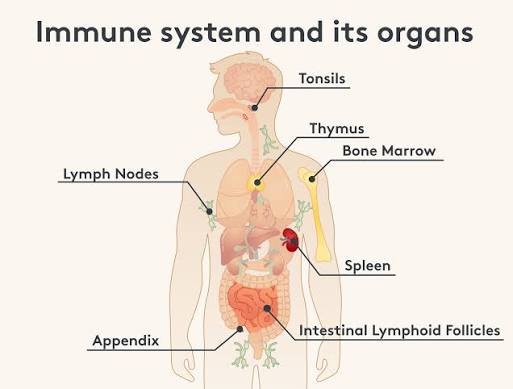
Human Immune System at a Glance
| Feature | What It Does |
|---|---|
| Skin & Mucous Membranes | Provide physical barriers |
| White Blood Cells | Perform multiple immune functions |
| Bone Marrow | Produces blood and immune cells |
| Lymph Nodes | Help organise immune responses |
| Antibodies | Recognise specific targets |
| Innate Immunity | Provides rapid, broad defence |
| Adaptive Immunity | Develops targeted responses |
| Immune Memory | Helps respond to certain repeat exposures |
| Inflammation | Part of the body’s defence and repair response |
| Vaccination | Trains adaptive immunity against specific diseases |
1. Your Skin Is Part of Your Immune Defence
When people imagine the immune system, they often picture white blood cells fighting germs inside the body.
But defence begins much earlier.
Your skin acts as an important physical barrier, making it difficult for many potentially harmful microorganisms to enter the body.
The body has several other protective barriers as well.
These include:
- Mucus in the respiratory tract
- Tears
- Saliva
- Stomach acid
- Tiny hair-like structures called cilia in the airways
- Protective substances produced by different tissues
These first-line defences can prevent potential threats from reaching deeper tissues.
This means immunity is not simply about attacking microbes after infection occurs. A major part of protection involves preventing them from establishing an infection in the first place.
2. You Actually Have Different Types of Immunity
The immune system is not one single defence mechanism.
Two major components are innate immunity and adaptive immunity.
Innate immunity provides rapid, broad responses. It includes physical barriers and several types of immune cells that can react quickly when they detect signs of infection or tissue damage.
Adaptive immunity is more targeted.
It involves specialised lymphocytes, including B cells and T cells, and can develop specific responses against particular targets.
In simple terms:
Innate immunity responds quickly and broadly. Adaptive immunity is more specific and can develop memory.
The two systems do not operate independently. They communicate and work together during immune responses.
3. Your Bone Marrow Is an Immune-System Factory
Bones may seem unrelated to immunity, but the soft tissue inside certain bones—bone marrow—plays a fundamental role.
Bone marrow produces blood cells, including cells that eventually perform important immune functions.
White blood cells include several specialised types rather than one universal “germ-fighting” cell.
Different cells have different jobs involving:
- Recognising potential threats
- Engulfing microorganisms
- Producing antibodies
- Coordinating immune responses
- Destroying certain infected cells
- Participating in inflammation
This division of labour is one reason the immune system can respond to many different biological challenges.
4. Fever Can Be Part of the Body’s Defence Response
Fever is often treated as though it is the disease itself.
In reality, fever is usually a response to an underlying condition, frequently an infection.
During certain immune responses, signalling molecules influence the brain’s temperature-regulating centre, causing the body to temporarily maintain a higher temperature.
Fever can be part of the body’s coordinated response to infection.
However, that does not mean every fever should simply be ignored.
Medical attention can be particularly important for:
- Very young babies with fever
- Persistent or severe fever
- Fever accompanied by breathing difficulty
- Confusion or unusual drowsiness
- Seizures
- Severe dehydration
- Other concerning symptoms
The appropriate response depends on age, temperature, symptoms and the underlying cause.
5. Inflammation Is Not Automatically Bad
The word “inflammation” is frequently presented online as something that must always be eliminated.
But inflammation is a normal part of the body’s defence and repair system.
If you cut your finger, the area may become:
- Red
- Warm
- Swollen
- Painful
These changes can occur partly because blood flow increases and immune processes are activated around the injured tissue.
Short-term inflammation can be protective.
The problem is different when inflammatory processes become excessive, inappropriate or persistent. Chronic inflammation is associated with a variety of health conditions.
So the goal is not to eliminate all inflammation. A healthy body needs properly regulated inflammatory responses.
6. The Immune System Can Remember Some Previous Infections
One of the most fascinating features of adaptive immunity is immunological memory.
After exposure to certain pathogens, populations of memory B cells and T cells can remain.
If the same pathogen is encountered again, these cells can help the immune system respond more efficiently.
This does not mean immunity after every infection lasts forever.
Protection varies depending on:
- The disease
- The pathogen
- The person’s immune response
- Time since exposure
- Changes in the pathogen
Nevertheless, immune memory is one of the most important features of adaptive immunity—and it also helps explain how vaccination can provide protection.
7. Vaccines Train the Immune System Without Requiring the Full Disease
Vaccination is one of the most practical applications of immune-system science.
A vaccine exposes the immune system to an antigen, genetic instructions for an antigen, or another carefully designed component depending on the vaccine technology.
This allows the adaptive immune system to develop a response and, in many cases, immune memory without requiring the person to experience the full natural disease.
Later exposure to the actual pathogen can therefore be met with a faster or more effective immune response.
Vaccines do not all work identically, and protection can vary in duration and effectiveness.
Some require:
- Multiple initial doses
- Booster doses
- Periodic updates
India’s vaccination programmes have played an important role in protecting children and adults against several serious infectious diseases.
8. Your Gut and Immune System Are Closely Connected
The digestive system is not simply responsible for breaking down food.
A substantial amount of immune activity is associated with the gut and surrounding lymphoid tissues.
This makes sense because the digestive tract constantly encounters food, microorganisms and substances from the outside world.
The intestines also contain an enormous community of microorganisms collectively known as the gut microbiome.
These microorganisms interact with the body in complex ways and can influence immune development and function.
However, this science is often oversimplified in advertising.
No single probiotic drink, fermented food or supplement can guarantee a “strong immune system.”
A varied, nutritionally adequate diet can support general health, but microbiome science is far more complicated than a single product claim.
9. Allergies Are Immune Reactions to Normally Harmless Substances
Pollen, dust mites and certain foods are not dangerous pathogens in the way many infectious microorganisms are.
Yet in people with allergies, the immune system can react to substances that would normally be harmless.
Depending on the allergy, symptoms may include:
- Sneezing
- Runny nose
- Itchy or watery eyes
- Skin reactions
- Swelling
- Digestive symptoms
- Breathing difficulty
Some allergic reactions can become severe and potentially life-threatening.
This demonstrates an important principle: a “stronger” immune response is not always better.
What the body needs is a well-regulated immune system capable of responding appropriately to genuine threats while tolerating harmless substances.
10. The Immune System Can Sometimes Attack the Body Itself
Normally, the immune system has mechanisms that help distinguish the body’s own tissues from potentially harmful foreign targets.
But this tolerance can sometimes fail.
In autoimmune diseases, the immune system mistakenly targets the body’s own cells, tissues or structures.
Examples of autoimmune conditions include:
- Rheumatoid arthritis
- Type 1 diabetes
- Lupus
- Multiple sclerosis
- Some thyroid disorders
Different autoimmune diseases affect different parts of the body and can vary greatly in symptoms and severity.
Their causes are often complex and may involve combinations of genetic and environmental factors.
Again, this shows why describing immunity simply as “strong” or “weak” can be misleading. Balance and regulation are essential.
Can You Really “Boost” Your Immune System?
Advertisements frequently claim that a particular juice, herb, vitamin or supplement can dramatically boost immunity.
The science is not that simple.
The immune system requires many nutrients and depends on overall health, but consuming excessive amounts of one nutrient does not automatically create superior immunity.
General habits that support normal immune function and overall health include:
- Eating a varied, balanced diet.
- Getting adequate protein and micronutrients.
- Sleeping sufficiently.
- Staying physically active.
- Avoiding smoking and tobacco.
- Limiting excessive alcohol.
- Managing diagnosed medical conditions.
- Following recommended vaccination schedules.
- Practising appropriate hygiene.
People with a genuine nutritional deficiency may benefit from treatment or supplementation under appropriate guidance.
But taking unnecessary high-dose supplements can sometimes cause side effects or interact with medicines.
Why Immune Balance Matters More Than “Maximum Immunity”
The immune system needs to perform an extraordinarily difficult balancing act.
It must recognise dangerous microorganisms while avoiding unnecessary attacks on harmless substances and the body’s own tissues.
Too little immune activity can increase vulnerability to infections.
Inappropriate immune activity can contribute to:
- Allergies
- Autoimmune diseases
- Excessive inflammation
That is why “maximum immunity” is not a scientifically useful health goal.
A better goal is to support normal, properly regulated immune function through vaccination, nutrition, sleep, physical activity and appropriate medical care.
FAQs
Q1. Can eating vitamin C prevent every cold or infection?
A. No. Vitamin C is an essential nutrient that contributes to normal immune function, but it does not provide guaranteed protection from colds or other infections. People should generally aim to obtain adequate nutrients through a balanced diet and use supplements when medically appropriate.
Q2. Does getting sick frequently always mean weak immunity?
A. No. Frequent illness can have many explanations, including repeated exposure to infections, age, allergies, stress, sleep patterns or underlying medical conditions. Unusually frequent, severe or persistent infections should be discussed with a healthcare professional.
Q3. Are immunity-boosting supplements necessary for healthy adults?
A. Not routinely. People with adequate nutrition generally do not need supplements simply because a product claims to “boost immunity.” Supplements may be appropriate for diagnosed deficiencies or specific medical situations, preferably with professional guidance.
Q4. Does stronger immunity mean you will never become ill?
A. No. Even a normally functioning immune system cannot prevent every infection. Immunity depends on the particular pathogen, previous exposure, vaccination status, age, health and many other factors. The goal is appropriate immune function, not an unrealistically invincible immune system.