 By Kartikey Bhatt
India’s pharmaceutical sector offers career opportunities far beyond working at a retail medical store. Pharmacy graduates today can build careers in drug research, pharmaceutical manufacturing, quality control, regulatory affairs, clinical research, pharmacovigilance, hospital pharmacy and healthcare companies. With India playing a major role in the global pharmaceutical industry, professionally trained pharmacy graduates continue to be important across healthcare and life sciences.
However, the quality of pharmacy education can differ considerably between institutions. A good college should provide strong laboratories, qualified faculty, research opportunities, practical training and exposure to the pharmaceutical industry. Students should also check whether their chosen course and institution meet the applicable regulatory requirements.
For students planning pharmacy admission in 2026, the following list presents the top 10 institutions based on the latest available NIRF Pharmacy ranking. Students should still compare individual courses because some highly ranked institutions specialise more heavily in postgraduate education and research than undergraduate B.Pharm programmes.
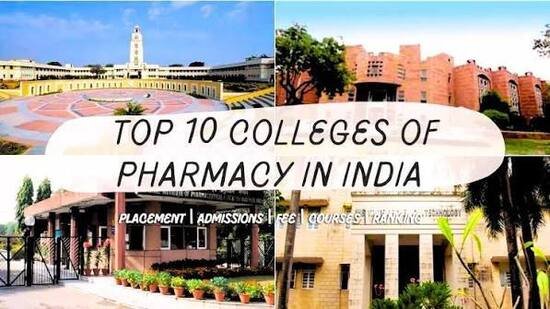
Top 10 Pharmacy Colleges in India 2026
| Rank | College/Institution | Location | Key Strength |
|---|---|---|---|
| 1 | Jamia Hamdard | New Delhi | Pharmacy education & research |
| 2 | BITS Pilani | Pilani, Rajasthan | Pharmacy, science & research |
| 3 | Panjab University | Chandigarh | Pharmaceutical sciences & research |
| 4 | JSS College of Pharmacy | Ooty, Tamil Nadu | Pharmacy education & clinical exposure |
| 5 | NIPER Hyderabad | Hyderabad, Telangana | Advanced pharmaceutical research |
| 6 | Institute of Chemical Technology | Mumbai, Maharashtra | Pharmaceutical technology & research |
| 7 | JSS College of Pharmacy | Mysuru, Karnataka | Pharmacy education & research |
| 8 | Manipal College of Pharmaceutical Sciences | Manipal, Karnataka | Pharmacy & healthcare ecosystem |
| 9 | NIPER Mohali | Mohali, Punjab | Pharmaceutical research & higher education |
| 10 | SRM Institute of Science and Technology | Chennai, Tamil Nadu | Pharmacy & multidisciplinary education |
Important: The ranking above follows the latest available national Pharmacy ranking ahead of the 2026 admission cycle. Course availability, eligibility, entrance requirements, fees and admission procedures should be checked separately because they differ between institutions.
1. Jamia Hamdard, New Delhi
Jamia Hamdard holds a leading position in Indian pharmacy education and is particularly well known for pharmaceutical sciences, healthcare education and research.
Its New Delhi location provides additional exposure to hospitals, healthcare organisations, pharmaceutical businesses and research institutions.
Major strengths include:
- Strong pharmaceutical education
- Research-oriented environment
- Experienced faculty
- Laboratory facilities
- Healthcare ecosystem
- Postgraduate and research opportunities
Students interested in B.Pharm should follow the university’s applicable 2026 admission criteria rather than assuming that admission is based on one common national pharmacy entrance examination.
2. BITS Pilani, Rajasthan
Birla Institute of Technology and Science (BITS), Pilani is widely recognised for engineering and science, but its pharmacy education also holds a prominent national position.
The institute can be particularly attractive to students interested in combining pharmaceutical science with technology, research and interdisciplinary learning.
Students can benefit from:
- Strong science foundation
- Research facilities
- Industry-oriented education
- Interdisciplinary opportunities
- Established alumni network
- Practical training ecosystem
Applicants should check the applicable BITSAT and B.Pharm admission conditions for 2026, including subject eligibility requirements.
3. Panjab University, Chandigarh
Panjab University has an established reputation in pharmaceutical education through its University Institute of Pharmaceutical Sciences.
For students seeking a public-university environment with a strong emphasis on pharmaceutical sciences and research, it can be an attractive choice.
The institution’s long academic history and research culture are major advantages.
Important areas can include:
- Pharmaceutics
- Pharmaceutical chemistry
- Pharmacology
- Pharmacognosy
- Drug research
- Pharmaceutical analysis
Students should verify the applicable 2026 undergraduate admission route and eligibility before applying.
4. JSS College of Pharmacy, Ooty
JSS College of Pharmacy, Ooty is one of the country’s leading institutions dedicated to pharmacy education.
Its pharmacy-focused environment can provide students with specialised academic and professional exposure rather than treating pharmacy as one department within a very large general university.
Students may receive exposure to laboratory work, pharmaceutical sciences, research and healthcare-related learning.
Ooty also provides a distinctive residential educational environment, although students from other regions should consider travel and accommodation arrangements before admission.
5. NIPER Hyderabad
National Institute of Pharmaceutical Education and Research (NIPER), Hyderabad is an important national institution specialising in pharmaceutical education and research.
There is, however, an important point for Class 12 students: NIPER institutions are especially relevant for advanced pharmaceutical education and research and should not automatically be treated like conventional B.Pharm colleges.
NIPER Hyderabad is particularly valuable for students planning long-term careers in:
- Pharmaceutical research
- Drug discovery
- Medicinal chemistry
- Biotechnology
- Pharmacology
- Regulatory sciences
- Pharmaceutical technology
Students should check programme-level eligibility carefully before including NIPER in an undergraduate admission plan.
6. Institute of Chemical Technology, Mumbai
Institute of Chemical Technology (ICT), Mumbai has a distinguished reputation in chemical technology, pharmaceutical sciences and related research areas.
Its Mumbai location is particularly useful because Maharashtra has a significant pharmaceutical and chemical-industry presence.
ICT can appeal to students interested in:
- Pharmaceutical technology
- Drug development
- Chemical sciences
- Industrial research
- Formulation technology
- Higher studies
Students should compare the exact undergraduate pharmacy-related programmes and applicable admission requirements for the 2026 session.
7. JSS College of Pharmacy, Mysuru
JSS College of Pharmacy, Mysuru is another highly ranked institution from the JSS higher-education ecosystem.
The college provides specialised education in pharmacy and benefits from connections with broader healthcare and life-sciences education.
Students can explore academic areas involving pharmaceutical formulations, medicines, drug action, analysis and healthcare.
Before choosing the college, evaluate:
- Course curriculum
- Laboratory infrastructure
- Faculty
- Research opportunities
- Practical training
- Industry exposure
- Total programme fees
The Mysuru location can also appeal to students who prefer a major educational city without the scale and living costs of some larger metros.
8. Manipal College of Pharmaceutical Sciences, Manipal
Manipal College of Pharmaceutical Sciences (MCOPS) is part of the Manipal Academy of Higher Education ecosystem and is one of India’s prominent pharmacy institutions.
A major advantage is its location within a large health-sciences environment.
Pharmacy students can benefit from broader exposure to medicine, hospitals, healthcare research and other allied disciplines.
Key strengths include:
- Modern academic infrastructure
- Pharmaceutical laboratories
- Research opportunities
- Healthcare exposure
- Multidisciplinary environment
- Industry-oriented learning
Since Manipal is a private/deemed university environment, students should calculate the entire programme cost, including tuition and accommodation.
9. NIPER Mohali
National Institute of Pharmaceutical Education and Research (NIPER), Mohali is another major national centre for pharmaceutical research and higher education.
Like NIPER Hyderabad, it is especially important for students considering postgraduate study and research-oriented pharmaceutical careers.
Its academic ecosystem can provide advanced exposure to drug research, pharmaceutical sciences and specialised disciplines.
B.Pharm students planning their future may consider NIPER Mohali as a potential destination for higher studies rather than assuming it offers the same undergraduate route as a conventional pharmacy college.
This distinction is important when preparing a Class 12 college list.
10. SRM Institute of Science and Technology, Chennai
SRM Institute of Science and Technology (SRMIST) completes the top 10 in the latest national Pharmacy ranking.
Its large multidisciplinary university ecosystem gives pharmacy students access to healthcare, science and research infrastructure.
Students may gain exposure to:
- Pharmaceutics
- Pharmacology
- Pharmaceutical chemistry
- Drug analysis
- Clinical and healthcare areas
- Research activities
Chennai’s extensive healthcare and pharmaceutical environment can also provide useful professional exposure.
Students should verify the specific campus, programme, eligibility and fee structure before applying.
Popular Pharmacy Courses After Class 12
Students often use “pharmacy course” as a general term, but several educational pathways are available.
Popular options include:
- B.Pharm – Bachelor of Pharmacy
- D.Pharm – Diploma in Pharmacy
- Pharm.D – Doctor of Pharmacy, where applicable
- Integrated or specialised programmes offered by certain institutions
For students interested in pharmaceutical companies, research, manufacturing and higher education, B.Pharm is one of the most commonly considered undergraduate pathways.
Course choice should depend on the student’s long-term career objective rather than simply selecting the shortest programme.
How to Get Admission to B.Pharm in 2026
Unlike MBBS and BDS, where NEET plays a central national role, B.Pharm admissions are not controlled by one universal entrance examination across every Indian college.
Admission can depend on the institution and state.
Students may encounter:
- University-specific entrance tests
- State-level entrance examinations
- National examinations accepted by particular institutions
- Class 12 merit-based selection
- Institution-specific counselling
Applicants should check the individual 2026 admission notification for every college on their shortlist.
What to Check Before Choosing a Pharmacy College
Ranking is useful for shortlisting, but it should not be the only factor.
Check carefully:
- Regulatory approval/status of the programme
- Course offered
- Laboratory facilities
- Faculty
- Research opportunities
- Industry connections
- Internship or practical training
- Placement record
- Fees
- Hostel expenses
- Location
- Higher-study opportunities
Students interested in research should give additional importance to laboratories, publications, research projects and postgraduate opportunities.
Career Options After B.Pharm
A pharmacy degree can lead to careers across pharmaceutical and healthcare industries.
Graduates may explore:
- Pharmaceutical manufacturing
- Quality assurance
- Quality control
- Regulatory affairs
- Pharmacovigilance
- Clinical research
- Hospital pharmacy
- Community pharmacy
- Pharmaceutical sales and marketing
- Drug formulation
- Research
- Government opportunities
Students can also pursue M.Pharm, MBA, research programmes or other specialised higher education depending on their career goals.
FAQs
Q1. Which is the No. 1 pharmacy college in India in 2026?
A. Based on the latest available NIRF Pharmacy ranking ahead of the 2026 admission cycle, Jamia Hamdard, New Delhi is ranked No. 1 in India for Pharmacy. BITS Pilani and Panjab University occupy the next leading positions.
Q2. Is NEET compulsory for B.Pharm admission in India?
A. NEET is not universally compulsory for B.Pharm admission across India. Admission requirements differ by state, university and institution. Some colleges use entrance examinations, while others may follow different approved admission mechanisms. Check the exact 2026 rules of your preferred college.
Q3. Is NIPER a good choice immediately after Class 12?
A. Students need to check the programme carefully. NIPER institutions are particularly prominent for postgraduate pharmaceutical education and advanced research, so they should not automatically be treated as conventional B.Pharm colleges for Class 12 students.
Q4. Which is better after Class 12: B.Pharm or D.Pharm?
A. It depends on your career objective. B.Pharm is a full undergraduate degree and generally provides broader opportunities in the pharmaceutical industry, research and higher education. D.Pharm is a diploma route with a different duration and career pathway. Students should compare eligibility, professional registration requirements and long-term career plans before choosing.