 By Akash Sharma
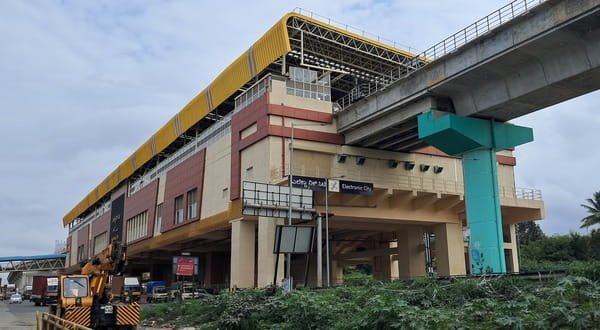
 Electronic City Metro Station is a flagship elevated station on the Yellow Line of Namma Metro in Bengaluru. Serving India’s largest IT hub, it has become a lifeline for thousands of tech professionals, students, and residents since its inauguration on 10 August 2025. Located in the heart of Electronic City Phase 1, the station significantly reduces travel time along the Hosur Road corridor, offering a fast, reliable, and eco-friendly alternative to Bengaluru’s notorious traffic. Its modern infrastructure supports the daily movement of IT employees working at major campuses like Infosys, Wipro, and Tech Mahindra while boosting connectivity across South Bengaluru.
Location
Electronic City Metro Station is situated at 378, Electronics Phase 1, Electronic City, Bengaluru, Karnataka 560100. It lies along the Hosur Road corridor in the Anekal taluk suburban area, directly serving one of India’s premier information technology hubs. The elevated structure stands prominently near major IT parks, residential apartments, shopping complexes, and educational institutions.
The station is strategically placed in a high-density mixed-use zone featuring corporate offices, gated residential communities, hospitals, schools, and local markets. Electronic City itself is a well-planned IT ecosystem spread across Phases 1 and 2, known for its green campuses, wide roads, and bustling commercial activity. Proximity to landmarks such as the Infosys campus and other tech giants makes it a natural focal point for daily commuters. The area around the station blends modern urban development with the dynamic energy of India’s Silicon Valley, where thousands of professionals converge every day. The elevated design ensures minimal disruption to ground-level traffic while providing excellent visibility and access.
Connectivity
Electronic City Metro Station offers outstanding multimodal connectivity, making it one of the most important transit nodes in South Bengaluru. It integrates seamlessly with road transport through BMTC buses, auto-rickshaws, taxis, and app-based cab services (Ola, Uber, Rapido) available at the station exits. Feeder bus services connect to internal areas of Electronic City, residential pockets, and nearby localities like Konappana Agrahara, Hebbagodi, and Bommasandra.
The station’s location along Hosur Road and proximity to the NICE Road and elevated expressway further strengthens regional connectivity. Commuters can easily reach major employment hubs, shopping destinations, and residential areas in South Bengaluru. Future interchanges and network expansions will enhance links to other parts of the city. Park-and-ride options, especially for two-wheelers, encourage commuters to combine personal and public transport.
This robust connectivity has eased pressure on Hosur Road, reduced travel times dramatically during peak hours, and promoted sustainable mobility. For IT professionals living in areas like Bommanahalli, HSR Layout, or farther north, the station provides a predictable and comfortable daily commute, contributing to better work-life balance and lower carbon emissions.
Route and Operations
Electronic City Metro Station operates on the Yellow Line (North-South Corridor) of Namma Metro, running from Rashtreeya Vidyalaya Road (RV Road) in the north to Delta Electronics Bommasandra in the south. It features side platforms: Platform 1 for northbound trains towards RV Road and Platform 2 for southbound trains towards Bommasandra.
Neighboring stations:
- Towards RV Road (North): Beratena Agrahara / Hosa Road (previous)
- Towards Bommasandra (South): Infosys Foundation Konappana Agrahara (next)
The Yellow Line spans approximately 19.15 km with 16 fully elevated stations. It passes through key South Bengaluru neighborhoods including BTM Layout, Central Silk Board, Bommanahalli, and Electronic City, before terminating at Bommasandra. The full end-to-end journey takes around 35–45 minutes, offering substantial time savings compared to road travel.
The station opened for public use on 11 August 2025 following inauguration on 10 August 2025. Trains generally operate from around 5:30 AM to 11:00 PM. Peak-hour frequencies are typically 5–8 minutes, with slightly longer intervals during off-peak times. Fares are distance-based, starting from a minimum of ₹10. Short trips cost ₹10–20, while longer journeys across the line range between ₹30–60 or more. Namma Metro smart cards provide convenience, minor discounts, and easy recharges for regular commuters. The elevated ride offers scenic views of IT parks, residential complexes, and Bengaluru’s southern landscape.
Gates and Access Points
Electronic City Metro Station is equipped with multiple entry and exit gates designed for efficient passenger dispersal in this high-traffic IT zone. The station features two side platforms and a well-planned concourse level to handle large volumes of commuters, especially during morning and evening office hours.
Gates are positioned to connect directly to Hosur Road, internal Electronic City roads, IT campuses, and auto/bus stands. Escalators, staircases, and dedicated elevators link street level to the concourse and platforms. The station is fully accessible for differently-abled passengers with ramps, wide gates, tactile flooring, braille signage, and priority services. Wheelchairs are available on request, and staff assistance ensures smooth navigation. Clear digital signage and announcements help commuters move quickly to their destinations, minimizing congestion even during peak rush hours.
Facilities
Electronic City Metro Station offers modern, commuter-centric amenities tailored to the needs of a high-density IT corridor. As an elevated station, it follows a standard three-level layout: street level (entrances/exits), concourse (ticketing and services), and platform level.
Key facilities include:
- Parking: Dedicated two-wheeler parking with significant capacity (reportedly the largest on the Yellow Line, around 1000 spaces). Four-wheeler parking is limited or planned in surrounding areas to support park-and-ride users.
- Accessibility: Fully Divyang-friendly with multiple elevators, escalators, ramps, wide automatic fare gates, and reserved spaces. The station prioritizes inclusive design for all passengers.
- Ticketing and Services: Token Vending Machines (TVMs), ticket counters, smart card recharge kiosks, and Automatic Fare Collection gates. Information desks and digital displays provide real-time train schedules and route guidance.
- Convenience Amenities: Clean restrooms, drinking water facilities, seating areas on the concourse and platforms, first-aid support, and small retail kiosks or vending machines for quick purchases. ATMs are available nearby or within the station premises.
- Safety and Support: 24/7 CCTV surveillance, fire safety systems, public announcement systems, security personnel, and regular housekeeping. The station maintains high standards of cleanliness and order.
- Other Features: Air-conditioned concourse areas, good lighting, feeder bus connectivity support, and bicycle parking in designated zones. The layout ensures logical passenger flow from gates to platforms, making it efficient even during heavy footfall.
These facilities cater exceptionally well to working professionals who value speed, comfort, and convenience during long commutes.
Significance and Impact
Electronic City Metro Station has transformed urban mobility in South Bengaluru since its opening. By directly serving a major employment hub, it has reduced dependency on private vehicles and corporate buses along the Hosur Road stretch, easing chronic traffic congestion and lowering pollution levels. IT professionals now enjoy more predictable commute times, leading to improved productivity and quality of life.
The station also supports economic growth by making Electronic City more accessible to talent from across the city. Students, shoppers, and residents in surrounding areas benefit from reliable connectivity to central Bengaluru via interchanges at RV Road (Green Line) and future connections at other stations. As Namma Metro expands further, Electronic City station will serve as a critical southern anchor, supporting Bengaluru’s vision of a sustainable, integrated, and world-class transit network.
In conclusion, Electronic City Metro Station exemplifies thoughtful urban planning with its prime location in India’s leading IT hub, excellent multimodal connectivity, efficient Yellow Line operations, accessible gates, and comprehensive modern facilities. It not only facilitates faster daily travel but also contributes to the broader goal of a greener and more livable Bengaluru. Whether you are an IT professional heading to work, a resident commuting to the city, or a visitor exploring South Bengaluru, this station delivers reliability, comfort, and efficiency in the heart of Electronic City.