 By Akash Sharma
 Sarai Kale Khan – Nizamuddin Metro Station, often referred to simply as Sarai Kale Khan Metro Station, is a key underground station on the Pink Line of the Delhi Metro. It serves as a vital transit hub in southeast Delhi, strategically positioned to support intermodal connectivity between metro, railway, bus terminal, and emerging rapid transit systems. Opened on 31 December 2018 as part of Phase III expansion, the station has quickly become an essential node for daily commuters, intercity travelers, and tourists due to its proximity to major transport terminals.
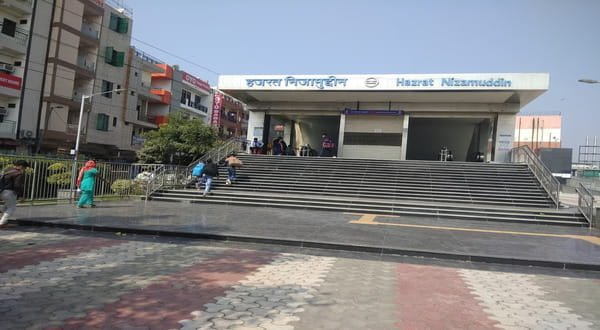
Location
The station is located along the Inner Ring Road in the Sarai Kale Khan area of South East Delhi, with coordinates approximately 28°35′22″N 77°15′23″E. It lies near the bustling Hazrat Nizamuddin Railway Station and the Veer Hakikat Rai ISBT (Inter-State Bus Terminal), also known as Sarai Kale Khan Bus Stand. The surrounding neighborhood includes Nizamuddin East and West colonies, with easy access to cultural landmarks such as Hazrat Nizamuddin Dargah and Humayun’s Tomb.
Geographically, the station sits at a strategic junction on the ring road, bridging residential zones, commercial areas, and major transport corridors. The underground layout helps preserve surface space in this densely populated and high-traffic region. It serves local residents, office-goers heading towards central Delhi or Noida, and long-distance travelers arriving or departing via trains and buses. The area around the station features a mix of hotels, eateries, markets, and institutional buildings, reflecting Delhi’s vibrant urban character.
Connectivity
Sarai Kale Khan – Nizamuddin Metro Station excels in multimodal connectivity, making it one of Delhi’s emerging mega transport hubs. It directly links with Hazrat Nizamuddin Railway Station for long-distance trains and the Sarai Kale Khan ISBT for interstate buses. This integration allows seamless transfers for travelers moving between different modes of transport without long detours.
The station connects to road-based options through DTC buses, auto-rickshaws, cycle-rickshaws, taxis, and app-based cabs (Ola, Uber) available near the gates. Feeder services and pedestrian pathways, including planned foot overbridges with travelators, further enhance last-mile connectivity. Its position on the Inner Ring Road provides quick access to Mathura Road, Lodhi Road, and other arterial routes.
In the near future, the station will gain even greater importance with the operationalization of the Delhi-Meerut RRTS (NaMo Bharat) and additional RRTS corridors towards Panipat and Alwar. This will transform Sarai Kale Khan into a comprehensive multimodal interchange, reducing congestion at other major terminals and offering faster regional travel options. Commuters can already benefit from its role in decongesting central Delhi routes while supporting eco-friendly mass transit.
Route and Operations
The station operates on the Pink Line (Line 7), a circular/semi-circular corridor spanning from Majlis Park to Shiv Vihar. It features an underground layout with island platforms. Platform 1 typically serves trains towards Shiv Vihar (anticlockwise direction via Mayur Vihar-I, Anand Vihar, etc.), while Platform 2 serves trains towards Majlis Park (clockwise via Ashram, Lajpat Nagar, INA, etc.).
Neighboring stations:
- Towards Majlis Park: Ashram (previous/next)
- Towards Shiv Vihar: Mayur Vihar-I (next, with interchange to Blue Line)
The Pink Line offers excellent east-west and north-south connectivity across Delhi. Key interchanges include Lajpat Nagar (Violet Line), Mayur Vihar-I or Anand Vihar (Blue Line), and others for broader network access.
Trains generally run from around 6:00-6:08 AM to 11:00-11:30 PM, with frequencies of 5-8 minutes during peak hours and slightly longer during off-peak. First train timings towards Majlis Park are approximately 6:07 AM, with the last around 11:18 PM. Travel time to nearby stations like Ashram or Lajpat Nagar is short (few minutes), while end-to-end journeys on the Pink Line take 60-90 minutes depending on direction. Fares are distance-based, starting at ₹10, with short trips costing ₹10-20 and longer ones ₹30-60. Smart cards provide convenience and minor discounts.
The underground route keeps commuters comfortable, shielded from Delhi’s weather extremes, while offering efficient connectivity to commercial hubs, residential colonies, and tourist spots.
Gates and Access Points
The station has multiple well-planned entry/exit gates (typically three main ones) designed for smooth dispersal towards different transport modes and landmarks. Clear signage helps passengers navigate efficiently.
Key gates include:
- Gate 1: Leads directly towards Sarai Kale Khan ISBT (Veer Hakikat Rai Inter-State Bus Terminal). Ideal for bus travelers and those heading to interstate destinations.
- Gate 2: Connects to Hazrat Nizamuddin Railway Station (platform-side or nearby entrance). Highly convenient for train passengers with luggage, offering quick access to prepaid taxis and auto stands.
- Gate 3: Also serves the Hazrat Nizamuddin Railway Station area but links to the main station road, auto-rickshaw stands, and pickup zones.
Additional access points and footpaths connect the metro with the railway station and bus terminal. The station is equipped with escalators, staircases, and lifts (including Divyang-friendly ones) for movement between street level, concourse, and platforms. Wheelchair-accessible paths and wide gates ensure inclusivity. During peak hours or train arrival times, these multiple gates help manage crowds effectively.
Facilities
Sarai Kale Khan – Nizamuddin Metro Station offers modern, passenger-centric amenities in its underground design, which includes street-level entrances, concourse (with fare control, ticketing, and shops), and platform levels.
Key facilities include:
- Accessibility: Fully Divyang-friendly with lifts (around three), escalators (multiple), ramps, wide automatic gates, and reserved spaces. Wheelchairs are available on request.
- Ticketing: Token Vending Machines (TVMs), ticket counters, smart card recharge facilities, and Automatic Fare Collection gates.
- Parking: Limited or shared parking options nearby; the focus is more on intermodal integration rather than large on-site parking due to space constraints and emphasis on public transport.
- Convenience: Clean restrooms (Sulabh-style), drinking water facilities, first-aid rooms, seating areas, and ATMs. Small retail shops and commercial spaces on the concourse cater to quick needs.
- Safety and Support: 24/7 CCTV surveillance, fire safety systems, public announcement systems, security personnel, and housekeeping staff. Emergency help desks and information counters are available.
- Other Features: Free or paid Wi-Fi in common areas, digital train information boards, and air-conditioned environments for comfort.
The station’s design supports high footfall, especially from railway and bus interchange passengers, while maintaining cleanliness and order. Ongoing upgrades for RRTS integration will further enhance facilities with better pedestrian links and amenities.
Significance and Impact
Sarai Kale Khan – Nizamuddin Metro Station plays a transformative role in Delhi’s transport ecosystem. By integrating metro services with railway, bus, and upcoming RRTS networks, it reduces travel hassles for thousands of daily users and eases pressure on road infrastructure. It supports economic activity in surrounding areas, boosts tourism by improving access to heritage sites, and promotes sustainable mobility in a city known for traffic challenges.
For long-distance travelers, it serves as a convenient gateway — arriving by train and immediately boarding a metro or bus. Local commuters benefit from reliable, time-saving connections to central Delhi, Noida, and other parts. As Delhi Metro expands and multimodal hubs develop, stations like Sarai Kale Khan will anchor the capital’s vision of seamless, integrated public transport.
In conclusion, Sarai Kale Khan – Nizamuddin Metro Station stands out for its strategic location, superior multimodal connectivity, efficient Pink Line routing, well-designed gates, and comprehensive facilities. It not only facilitates movement but also enhances the overall travel experience in one of Delhi’s busiest transit zones. Whether you are catching a train, heading to office, exploring the city, or traveling interstate, this station offers reliability, convenience, and forward-looking infrastructure that aligns with the future of urban mobility in India.