 By Saurav
The top cars in India for first-time buyers are the compact hatchbacks and small SUVs that combine easy driving, low running costs, and prices that start well under ₹6 lakh, with names like the Maruti Alto K10, Celerio, Wagon R, Swift, Tata Tiago, Tata Punch, and Hyundai Grand i10 Nios leading most shortlists. A first car doesn’t need to be the fanciest one on the lot: it should be easy to park, forgiving in traffic, cheap to maintain, safe enough for your family, and easy to resell. Prices dropped across the small-car segment after the GST revision in September 2025, which has made new cars more accessible than they’ve been in years. Below are ten strong options, what makes each one suit a beginner, and how to choose between them. Prices are approximate ex-showroom starting figures from recent listings and vary by city and variant, so confirm current prices with a dealer.
What First-Time Buyers Should Look For
- Easy driving: light steering and clutch, good visibility, and an optional automatic gearbox for city traffic.
- Compact size: a small footprint makes parking and tight lanes less stressful.
- Low running costs: good mileage, affordable servicing, and cheap spare parts.
- Safety: airbags, ABS, and crash-test results matter, especially for families.
- Resale value: popular models are usually easier to sell later.
- Reliable service network: workshops nearby reduce hassle.
- Fit for your use: daily commute, family trips, or occasional highway runs call for different cars.
The Ten Cars
1. Maruti Suzuki Alto K10 (from about ₹3.70 lakh)
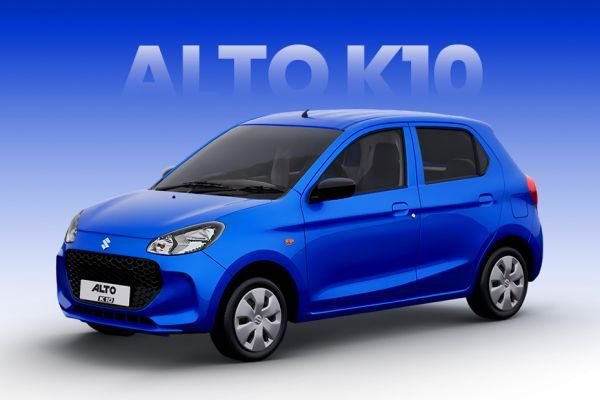
- Why it suits beginners: one of the cheapest, simplest new cars, with light controls, a punchy 1.0-litre engine, and an AMT option.
- Mileage: roughly 24 km/l claimed.
- Good to know: a basic cabin and a 2-star Global NCAP rating, so check which safety features come with the variant you choose.
2. Maruti Suzuki S-Presso (from about ₹3.50 lakh)
- Why it suits beginners: a high seating position and good visibility make city driving less intimidating, and it’s among the lowest-priced cars.
- Mileage: roughly 24 to 25 km/l claimed.
- Good to know: a compact, utilitarian cabin.
3. Renault Kwid (from about ₹4.50 lakh)
- Why it suits beginners: SUV-inspired styling, a roomy-feeling cabin for its size, and a modern touchscreen, with a facelift launched in July 2026.
- Mileage: roughly 21 to 22 km/l claimed.
- Good to know: it has a 1-star Global NCAP rating, and Renault’s service network is smaller than Maruti’s, so weigh safety and service access.
4. Maruti Suzuki Celerio (from about ₹4.70 lakh)
- Why it suits beginners: among the most fuel-efficient petrol cars in India, with roomy rear space and a smooth AMT.
- Mileage: roughly 25 km/l or more claimed.
- Good to know: it carries a 3-star Global NCAP rating.
5. Maruti Suzuki Wagon R (from about ₹4.99 lakh)
- Why it suits beginners: tall-boy design gives generous headroom, a large boot for its size, and easy entry and exit, which suits families and older relatives.
- Mileage: roughly 23 to 25 km/l claimed.
- Good to know: a no-frills cabin, but strong resale and low running costs.
6. Tata Tiago (from about ₹4.6 to 4.8 lakh)
- Why it suits beginners: one of the safest choices in this price range, with a 4-star Global NCAP adult rating, a solid build, and a comfortable ride.
- Mileage: roughly 19 to 20 km/l claimed for petrol.
- Good to know: fuel economy trails the most efficient Marutis, and an electric version is also available.
7. Maruti Suzuki Swift (from about ₹5.8 lakh)
- Why it suits beginners: fun to drive, with a peppy 1.2-litre engine, good mileage, and strong resale value, and a CNG with AMT option was added in 2026.
- Mileage: roughly 24 to 25 km/l claimed.
- Good to know: it sits at the upper end of the budget, and rear space is average.
8. Hyundai Grand i10 Nios (from about ₹5.6 lakh)
- Why it suits beginners: a refined engine, a well-equipped cabin, and a polished feel, with petrol, CNG, and AMT options.
- Mileage: roughly 20 to 25 km/l claimed depending on fuel type.
- Good to know: higher variants can get pricey.
9. Tata Punch (from about ₹5.6 lakh)
- Why it suits beginners: SUV-style height and ground clearance for bad roads, a strong safety reputation with a 5-star Global NCAP adult rating from its initial test, and a spacious feel.
- Mileage: roughly 18 to 20 km/l claimed.
- Good to know: it’s a little heavier to run than small hatchbacks, so city mileage is modest.
10. Hyundai Exter (from about ₹5.8 lakh)
- Why it suits beginners: a compact SUV with a modern cabin, a feature-rich list, and a facelift launched in March 2026, with petrol and CNG options.
- Mileage: roughly 19 to 20 km/l claimed for petrol.
- Good to know: prices climb quickly with higher variants.
Maruti Suzuki’s Baleno, with a 2026 facelift starting near ₹6 lakh, is another popular option if you can stretch the budget slightly.
How to Choose Among Them
If budget is the main concern: the Alto K10, S-Presso, and Kwid keep the purchase and running costs low.
If you want the best mileage: the Celerio, Wagon R, and Swift lead on efficiency.
If safety is your top priority: the Tiago and Punch stand out for crash-test performance among cars in this range, and it’s worth comparing airbags, ABS, and rating results across all candidates.
If you drive mostly in city traffic: consider an AMT (automated manual) version, which removes clutch work.
If you drive on rough roads or want a higher seating position: the Punch, Exter, and S-Presso suit you better.
If you want resale confidence: Maruti models are typically easiest to sell.
Costs Beyond the Sticker Price
- On-road price includes ex-showroom price, registration, insurance, and other charges, and is usually noticeably higher than the headline figure.
- Insurance: compare third-party and comprehensive options.
- Fuel: petrol, CNG, and electric options have different running costs.
- Servicing and spares: cheaper for popular models.
- Accessories and extended warranty: budget for these if you want them.
- Loan interest: if you finance, use a calculator to see the total cost, not just the EMI.
Smart Buying Tips
- Test drive at least three cars, including in traffic and, if possible, on a highway.
- Check the safety features of the exact variant you plan to buy, as base models may have fewer.
- Compare on-road prices across dealers, and ask about waiting periods.
- Consider CNG if you drive a lot, but check boot space and the refuelling network.
- Look at the service network near your home or office.
- Consider a loan carefully. Keep the EMI comfortably within your budget and compare lenders.
- Negotiate and compare offers, including exchange bonuses and year-end discounts.
- Don’t stretch for features you won’t use. A well-chosen mid-variant often gives the best value.
Frequently Asked Questions
Q1. Which is the cheapest new car in India for a first-time buyer?
A: The Maruti Suzuki S-Presso and Alto K10 are among the lowest priced, starting around ₹3.5 to 3.7 lakh ex-showroom.
Q2. Which small car is the safest?
A: The Tata Tiago and Tata Punch have earned strong Global NCAP results among cars in this price range, though you should compare airbags and ratings for the exact variant.
Q3. Should a first-time buyer choose a manual or an automatic?
A: An AMT automatic can make city driving easier, while a manual is usually cheaper and gives more control, so test both.
Q4. Is CNG a good option for a first car?
A: It can lower running costs for high-mileage drivers, though it reduces boot space and requires access to CNG stations.
Q5. How much should I budget on top of the ex-showroom price?
A: Plan for registration, insurance, and other charges, which can add a meaningful amount, so ask the dealer for the full on-road price.