 By Akash Sharma
 MG Road Metro Station is a bustling elevated station on the Yellow Line of the Delhi Metro, located in Gurugram (formerly Gurgaon), Haryana. It serves as a vital transit point for professionals, shoppers, and residents in one of Gurugram’s prime commercial and residential zones. Opened on June 21, 2010, along with several other stations on the Yellow Line extension, the station has grown into a key hub due to its proximity to major shopping malls, corporate offices, and residential societies. Its strategic placement makes it popular among daily commuters traveling between Delhi and Gurugram’s business districts.
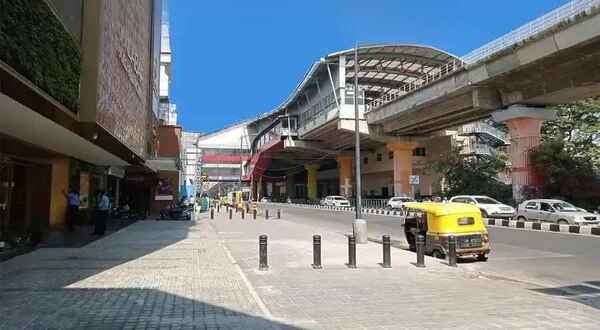
Location
MG Road Metro Station is situated in Sector 28, near Maruti Housing Colony, Gurugram, Haryana, with the pincode 122022. Its geographic coordinates are approximately 28.4796°N, 77.0800°E. The station lies along the Mehrauli-Gurgaon Road (MG Road), from which it takes its name, in a highly developed urban corridor.
The area around the station is a vibrant mix of commercial and residential developments. It is flanked by two prominent shopping destinations: DLF City Centre Mall (also known as DT City Centre) on one side and MGF Metropolitan Mall on the other. Other nearby landmarks include Sahara Mall, Plaza Mall, and various corporate offices. Residential complexes such as Beverley Park, Essel Towers, Heritage City, and societies in Sushant Lok and Sector 28 are within easy reach. The station’s elevated structure provides commuters with sweeping views of Gurugram’s bustling skyline, wide roads, and modern high-rises. Its location in the heart of the Millennium City places it conveniently between Sikandarpur and IFFCO Chowk, making it an ideal stop for those heading to shopping, dining, or office spaces in this dynamic part of Gurugram.
Connectivity
MG Road Metro Station offers strong multi-modal connectivity, linking Gurugram’s commercial heart with Delhi and other parts of the NCR. As part of the Yellow Line, it connects passengers northward to central Delhi areas like Rajiv Chowk, Chandni Chowk, and New Delhi Railway Station, and southward toward HUDA City Centre. Commuters can interchange at key stations such as Sikandarpur (for Rapid Metro) or further stations for other lines, enabling access to the airport, Noida, and Faridabad.
Last-mile connectivity is excellent, with auto-rickshaws, e-rickshaws, taxis (Uber, Ola), and cycle rickshaws available at designated points near the gates. The surrounding road network, including NH-48 and internal sector roads, supports smooth private vehicle movement. Feeder bus services and proximity to major highways enhance accessibility to nearby residential pockets and commercial hubs. For longer journeys, the station serves as a convenient node for those traveling to Delhi’s major terminals or inter-state destinations.
The area’s commercial vibrancy attracts shoppers from across the region, while professionals use it for daily commutes to nearby offices. Future Gurugram Metro expansions are expected to further strengthen its role, improving intra-city travel and integration with emerging corridors.
Route and Operations
MG Road Metro Station operates on the Yellow Line with two side platforms in an elevated double-track configuration:
- Platform 1: Southbound trains towards Millennium City Centre Gurugram (HUDA City Centre). Next station: IFFCO Chowk.
- Platform 2: Northbound trains towards Samaypur Badli. Next station: Sikandarpur.
Trains run at frequent intervals of 2-5 minutes during peak hours and slightly longer during off-peak periods. The first trains typically begin operations around 5:30-6:00 AM, with the last services concluding around 11:00 PM to midnight. The Yellow Line spans a significant distance across Delhi and Gurugram, offering end-to-end travel times of approximately 70-80 minutes.
The route from MG Road passes through iconic landmarks such as Qutub Minar, AIIMS, and Connaught Place when heading north, while the southern stretch serves Gurugram’s key commercial and residential sectors. Fares are distance-based: short trips within Gurugram may cost ₹20-40, while journeys to central Delhi typically range from ₹50-70. Automated announcements, digital display boards, and clear signage assist passengers in navigating efficiently. As a station near major malls and offices, it experiences high footfall, particularly during shopping hours and evening rush.
Gates and Exits
MG Road Metro Station features two primary entry/exit gates, strategically placed for convenient access to surrounding landmarks:
- Gate 1: Located near DLF City Centre Mall (DT City Centre). This gate is popular among shoppers heading to the mall, nearby retail outlets, and offices. It also serves parts of Sector 28 and Maruti Housing Colony.
- Gate 2: Opens towards MGF Metropolitan Mall. Commuters use this exit for access to the second major mall, additional shopping complexes, and residential areas on the opposite side.
Both gates are equipped with stairs, escalators, and elevators (lifts) for easy movement between street level, concourse, and platforms. The station is fully accessible and Divyang-friendly, with ramps, tactile paving, dedicated seating, and priority assistance for differently-abled passengers. Clear signage and security personnel help guide crowds, especially during peak shopping periods. Drop-off and pick-up zones near the gates are well-managed to handle vehicular traffic along the busy MG Road.
Facilities
MG Road Metro Station is equipped with a range of modern amenities to ensure a comfortable and convenient experience for passengers:
Ticketing and Information: Ticket counters, Automated Ticket Vending Machines (ATVMs), and smart card recharge facilities are available on the concourse level. Customer care desks provide route guidance, real-time train updates, and journey planning support.
Parking: The station offers paid parking managed by DMRC, with dedicated spaces for two-wheelers and four-wheelers. This facility is popular among park-and-ride users, particularly shoppers and office-goers. Monthly parking options are also available.
Banking and Retail: Multiple ATMs from banks such as HDFC Bank, Yes Bank, State Bank of India, and IndusInd Bank are located near the station. Small retail kiosks and shops on the unpaid concourse sell snacks, beverages, newspapers, magazines, and essential items. The immediate proximity to DLF City Centre and MGF Metropolitan Malls provides extensive food courts, dining options, and shopping experiences right outside the gates.
Accessibility and Comfort: Escalators, elevators, clean Sulabh toilets, drinking water fountains, and adequate seating enhance passenger comfort. The station features proper lighting, announcements in multiple languages, and air-conditioned areas where applicable. Wi-Fi services (where provided) and mobile charging points add to convenience.
Safety and Security: Round-the-clock CCTV surveillance, fire safety systems, and trained security staff maintain high safety standards. Lost-and-found counters, first-aid facilities, and emergency protocols are in place. The station’s elevated design incorporates natural lighting and ventilation for a pleasant environment.
Additional conveniences include well-maintained surroundings and easy access to nearby hotels, restaurants, and entertainment options within the malls.
Significance and Future Outlook
MG Road Metro Station plays a pivotal role in supporting Gurugram’s commercial ecosystem. By providing direct access to major malls and residential societies, it has boosted retail activity, real estate values, and daily mobility in Sector 28 and surrounding areas. It serves a diverse mix of shoppers, professionals, and local residents, contributing to reduced road congestion and promoting sustainable public transport in the rapidly growing city.
The station’s location in a prime commercial corridor has made it a landmark in itself, with the malls on either side acting as major attractions. Challenges such as peak-hour crowding, especially during weekends and festive seasons, are managed through efficient operations and crowd control measures.
Looking ahead, ongoing and planned metro expansions in Gurugram, including new corridors and better integration with the Rapid Metro network, will further elevate the station’s importance. Infrastructure upgrades may include enhanced parking, additional facilities, and improved last-mile connectivity.
In conclusion, MG Road Metro Station exemplifies efficient urban transit with its prime location, reliable Yellow Line connectivity, straightforward routes, accessible gates, and comprehensive facilities. Whether you are indulging in retail therapy at nearby malls, commuting to work, or traveling to Delhi, it offers reliability, convenience, and comfort. As Gurugram continues its transformation into a modern metropolis, stations like MG Road will remain essential pillars of the city’s public transportation network, connecting people to opportunities, leisure, and growth.