 By Kartikey Bhatt
 A sudden medical bill, school fee, rent payment or business expense can make an instant loan on a mobile phone look extremely attractive. You download an app promising ₹10,000 or ₹50,000 within minutes, upload your PAN and Aadhaar details, and expect a simple borrowing experience. Instead, you may discover hidden charges, extremely short repayment periods, unauthorised access to personal data or even threatening calls demanding money.
This is why illegal and fake loan apps are a serious concern for Indian borrowers. Fraudulent apps often attract users with promises such as “instant approval”, “no credit check” or “loan in 5 minutes”. Some may misuse contacts, photographs or other personal information to pressure borrowers. The safest approach is to verify who is actually lending the money before sharing documents or accepting a loan.
The Reserve Bank of India (RBI) advises borrowers to check whether a digital lending app is associated with an RBI-regulated bank or NBFC by visiting that lender’s official website. It also advises people to avoid loan apps received through links in SMS messages or social media.
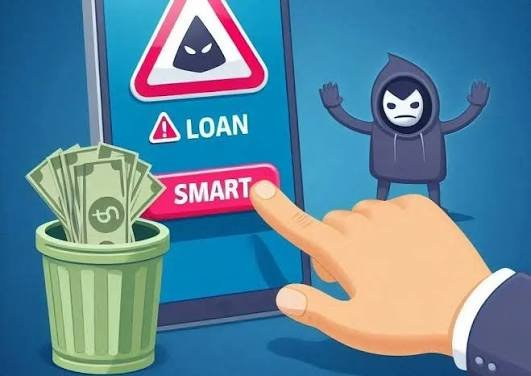
What Are Illegal Fake Loan Apps?
A fake or illegal loan app generally presents itself as a legitimate digital lender without providing the transparency, regulatory connection or borrower protections expected from lawful lending.
The app may offer a small loan quickly but hide important information about charges, repayment or the actual lender.
Some fraudulent operations are designed primarily to collect personal information or money rather than provide legitimate credit.
Common characteristics include:
- Promising loans with almost no verification.
- Asking for unnecessary access to contacts, photos or files.
- Hiding the identity of the actual bank or NBFC.
- Charging unexpected processing or service fees.
- Asking borrowers to pay money before loan disbursement.
- Using personal UPI IDs or unrelated bank accounts for repayment.
- Threatening borrowers or their family members.
- Sending loan offers through random WhatsApp, Telegram or SMS links.
- Claiming to be “RBI approved” without verifiable information.
A professional-looking app or website alone does not prove that a lender is legitimate.
1. Verify the Actual Bank or NBFC Before Applying
This should be your first step.
A digital lending app may not itself be the organisation providing the loan. It can operate as a lending service provider working with a regulated bank or Non-Banking Financial Company (NBFC).
Before entering your PAN, Aadhaar or bank information, identify the actual regulated lender behind the loan.
Visit the official website of the concerned bank or NBFC and check whether it mentions the digital lending app or service provider.
Before applying, confirm:
- Name of the bank or NBFC providing the loan.
- Official website of the lender.
- Customer-care information.
- Grievance redressal details.
- Loan interest rate and Annual Percentage Rate (APR).
- Processing fees and other applicable charges.
- Repayment schedule.
- Privacy policy.
If you cannot clearly determine who is lending the money, avoid the app.
2. Never Download Loan Apps From Random Links
One of the easiest ways scammers reach borrowers is through messages such as:
“₹1,00,000 loan approved! No documents required. Apply now.”
The message then provides a link.
Do not install financial applications through unknown links received over:
- Telegram
- SMS
- Social media messages
- Unknown emails
- Pop-up advertisements
RBI awareness guidance specifically advises borrowers to avoid downloading lending apps received through SMS or social-media links.
Even if an application appears in an app store, you should still independently verify the lender behind it.
3. Check App Permissions Carefully
Your smartphone contains an enormous amount of private information.
A suspicious loan app may request permissions that appear unnecessary for providing a loan.
Be particularly cautious if an app aggressively asks for access to your:
- Contact list
- Photo gallery
- Videos
- Messages
- Call logs
- Microphone
- Files
- Location
Current RBI digital-lending requirements emphasise need-based data collection with the borrower’s prior and explicit consent.
Ask yourself a simple question:
Why does this loan app need this information?
If the permission has no sensible relationship with the service being provided, investigate before proceeding.
4. Never Share OTP, PIN or Banking Passwords
No legitimate loan application requires your ATM PIN, UPI PIN or internet-banking password to approve a loan.
Never share:
- Debit or credit card PIN
- UPI PIN
- Net-banking password
- CVV
- OTP
- Email password
- Mobile banking password
An OTP may legitimately be used during specific verification processes, but you should enter it only in the genuine platform where you initiated the transaction. Do not read it aloud or send it to someone claiming to be a loan officer.
A bank employee, RBI official or legitimate customer-care executive should never ask you to disclose your UPI PIN or banking password.
5. Read the Key Fact Statement Before Accepting the Loan
A genuine digital loan should not leave you guessing how much you actually owe.
RBI’s digital-lending framework requires regulated lenders to provide borrowers with important information, including the Annual Percentage Rate (APR) and a Key Fact Statement.
Do not look only at the amount credited to your bank account.
Check:
- Amount sanctioned
- Amount actually disbursed
- Interest rate
- APR
- Processing charges
- Other applicable charges
- Repayment amount
- Repayment dates
- Penal charges for default
- Loan tenure
For example, an app advertising a ₹10,000 loan might deduct charges before disbursement while demanding repayment calculated on different terms. Reading the documentation helps identify such problems before you accept the loan.
6. Watch for Major Fake Loan App Red Flags
Fraudulent loan apps frequently use urgency to prevent borrowers from checking details carefully.
Stop immediately if you notice warning signs such as:
- “Guaranteed loan for everyone.”
- “No verification required.”
- Extremely high loan limits for first-time users.
- Pressure to apply immediately.
- No identifiable regulated lender.
- No proper customer support.
- No clear loan agreement.
- No transparent APR.
- Advance payment demanded before disbursement.
- Repayment requested to a suspicious personal account.
- Threats after installation.
- Requests to install additional APK files.
- Claims that the app is “RBI registered” without evidence.
Remember that the RBI regulates banks and NBFCs; a digital lending app should have a verifiable relationship with a regulated lender rather than relying on vague claims of “RBI approval”.
7. Protect Your Aadhaar, PAN and KYC Documents
Fake lending operations can potentially misuse identity documents.
Do not casually send photographs or copies of your PAN, Aadhaar, bank statements or salary documents to an unknown person on WhatsApp.
Before providing KYC information:
- Verify the lender.
- Check that you are using the genuine app or website.
- Understand why the document is required.
- Read the privacy policy.
- Avoid sending KYC documents to unknown personal numbers.
- Do not upload documents to websites reached through suspicious links.
If possible, avoid storing unnecessary copies of sensitive financial documents in easily accessible phone folders.
8. Do Not Pay More Money Because of Threats
Some illegal lending operations rely heavily on intimidation.
A borrower may receive threatening messages claiming that photographs will be circulated, contacts will be called or legal action will happen immediately unless an additional payment is made.
Do not panic and keep transferring money simply because someone is threatening you.
Preserve evidence instead.
Save:
- Screenshots of messages
- App name and screenshots
- Phone numbers
- WhatsApp conversations
- Payment receipts
- UPI IDs
- Bank-account information
- Loan documents
- Emails
- Call records where legally and practically available
Do not delete the evidence before reporting the incident.
9. Report Fake Loan Apps and Financial Fraud Quickly
If money has been fraudulently taken from your bank account, speed matters.
India’s National Cybercrime Helpline is 1930, available for reporting cyber financial fraud. Complaints can also be filed through the National Cyber Crime Reporting Portal.
For suspected unauthorised lending activity, borrowers can also use appropriate RBI complaint/awareness mechanisms such as the Sachet system where applicable.
If you have suffered financial fraud:
- Call 1930 immediately.
- Inform your bank or payment provider.
- Block compromised cards or accounts if necessary.
- Change exposed banking passwords.
- File a cybercrime complaint.
- Preserve transaction IDs and screenshots.
- Report suspicious loan apps to the appropriate authorities.
- Approach your local police/cybercrime police station where necessary.
The earlier a financial cyber fraud is reported, the better the possibility that authorities and financial institutions can act on the transaction trail.
10. What to Do If You Already Installed a Suspicious Loan App
Do not simply uninstall it and assume everything is solved.
First preserve screenshots and other evidence that may be needed for a complaint.
Then review the permissions granted to the app and revoke unnecessary access.
If you shared banking credentials, immediately secure the affected accounts.
Take these steps:
- Save evidence before deleting anything.
- Revoke the app’s permissions.
- Uninstall the suspicious application.
- Change important passwords.
- Contact your bank if financial information was exposed.
- Monitor bank and UPI transactions.
- Check your credit report for unfamiliar loans.
- Report harassment or fraud.
- Warn family members if scammers have accessed your contacts.
If an unknown loan appears in your credit report, dispute it with the concerned credit information company and lender promptly rather than ignoring it.
A Simple Safety Checklist Before Taking an Online Loan
Before pressing “Apply”, spend five minutes checking the lender.
- Verify the bank or NBFC behind the app.
- Use the lender’s official website for confirmation.
- Avoid APKs and random loan links.
- Read the Key Fact Statement.
- Check APR and total repayment cost.
- Review app permissions.
- Never disclose UPI PIN or banking passwords.
- Keep copies of loan documents.
- Avoid lenders that demand unexplained advance payments.
- Walk away if the lender’s identity cannot be verified.
Those five minutes can protect your money, identity and personal information from a much bigger problem.
FAQs
1. How can I check whether a loan app is genuine in India?
Identify the bank or NBFC actually providing the loan and verify the app’s association with that regulated lender through the bank or NBFC’s official website. Do not rely only on the app’s own claim that it is legitimate.
2. What should I do if a fake loan app is threatening me?
Do not make additional payments simply because of threats. Preserve screenshots, phone numbers, payment details and other evidence. Report cybercrime through the appropriate authorities and contact the police if you face threats, blackmail or harassment.
3. What is the cybercrime helpline number for fake loan app fraud?
For cyber financial fraud in India, call the National Cybercrime Helpline at 1930 as quickly as possible. Keep your transaction details and other evidence ready when reporting the incident.
4. Can a loan app access my contacts and photos?
Apps can access information when relevant permissions are granted, but regulated digital lending practices require data collection to be need-based and consent-driven. Be extremely cautious about loan apps demanding broad or unnecessary access to contacts, photographs, messages or other personal information.